

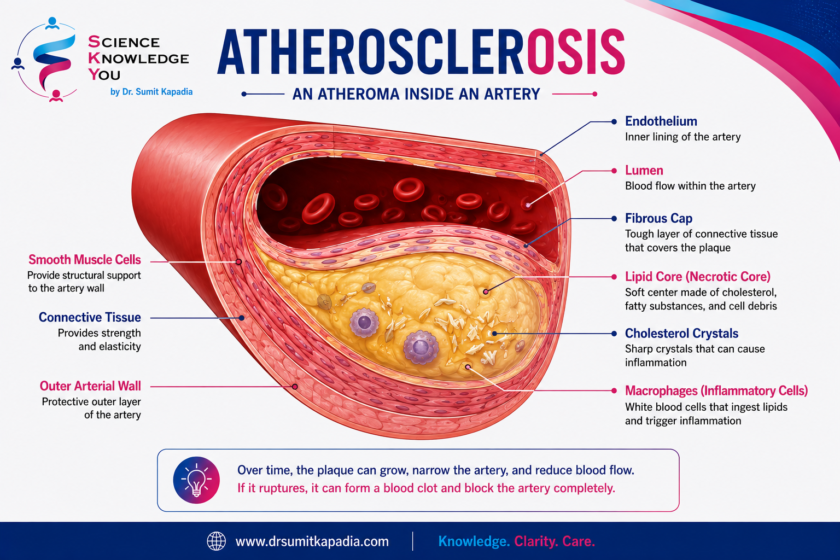
Understanding what is atherosclerosis disease starts with knowing that it is a condition in which cholesterol, fatty material, and inflammatory cells collect inside an artery wall and form a deposit called plaque. Over years, that plaque thickens and stiffens the artery, so less blood reaches the heart, brain, kidneys and legs.
Plaque causes most heart attacks, a large share of strokes, and much disabling leg artery disease. The process is usually silent until an artery is badly narrowed or a plaque suddenly tears open. This article covers its development, causes, symptoms, diagnosis and treatment.
Key Takeaways
- Atherosclerosis is fatty plaque building up inside artery walls and restricting blood flow.
- It develops gradually over decades, often beginning in early adulthood.
- Early signs of atherosclerosis are usually absent, so risk assessment matters.
- Nine modifiable risk factors account for most heart attacks worldwide.
- Diet, exercise, blood pressure control and quitting smoking lower risk.
Atherosclerosis Meaning: What Is Atherosclerosis?
Atherosclerosis is a disease in which fatty deposits (plaques) develop inside the arteries, causing them to narrow and harden. In simple terms, the atherosclerosis definition refers to the a build-up of cholesterol and scar tissue (fibrofatty lesions) in the wall of medium and large arteries.
A healthy artery is smooth and flexible. In atherosclerosis, plaque narrows it and limits the oxygen and nutrients reaching tissues and organs.
Stages of Atherosclerosis
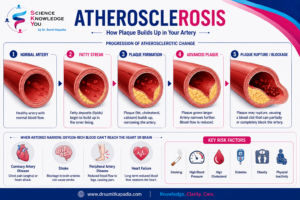
Endothelial Damage and Immune Response
The endothelium is the delicate inner lining of your arteries. Major risk factors like smoking, high blood pressure, elevated blood sugar, and high LDL cholesterol damage this barrier. Once compromised, it allows cholesterol particles to seep into the arterial wall, triggering an immune response that draws white blood cells to the site.
Fatty Streak Formation
Immune cells absorb the trapped cholesterol and become foam cells, which cluster into a yellow fatty streak. These cause no symptoms and are common in young adults.
Plaque Growth
Over years, smooth muscle cells lay a fibrous cap over a soft, fatty core. It enlarges slowly and may narrow the artery enough to limit blood flow on exertion.
Plaque Rupture or Erosion
If the plaque’s outer layer ruptures or erodes, the body quickly forms a blood clot over the site. This sudden blockage is what causes most heart attacks and strokes.
Is Atherosclerosis the Same as Arteriosclerosis Disease?
Atherosclerosis vs Arteriosclerosis Disease
Arteriosclerosis is the broad term for any hardening or loss of elasticity in an artery wall. Atherosclerosis, on the other hand, is one specific type, defined by plaque containing cholesterol. This distinction matters because plaque, unlike simple stiffening, can rupture and block an artery abruptly.
What Causes Atherosclerosis?
Atherosclerosis develops where several risk factors act together on the artery wall over decades. A study across 52 countries found nine modifiable factors accounted for over 90% of the risk of a first heart attack.
Common Risk Factors
Several factors increase the risk of developing atherosclerosis by damaging the artery walls and promoting plaque buildup. The causes of Atherosclerosis are as below:
- High cholesterol: Too much LDL cholesterol causes plaque to form in the arteries.
- Smoking: It damages the artery lining and raises the risk of blood clots.
- Diabetes: High blood sugar over time damages the blood vessels.
- High blood pressure: Extra pressure strains the artery walls and speeds up damage.
- Obesity: Extra weight, especially around the belly, leads to more inflammation in the body.
- Physical inactivity: Not exercising raises the risk of high cholesterol, high blood pressure, and diabetes.
- Poor diet: Eating too much saturated fat, salt, and processed food raises the risk of heart disease.
- Family history: If close relatives had early heart disease, your risk is higher too.
- Age: Risk rises with age, since plaque builds up over many years.
Atherosclerosis Symptoms and Signs of Atherosclerosis
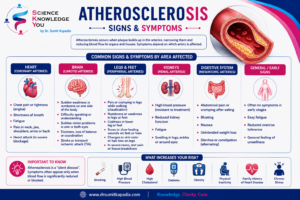
Atherosclerosis is often asymptomatic early on. Plaque can build for years before reducing blood flow, so symptoms usually appear only when the disease is advanced or a plaque ruptures.
Early on, there may be no symptoms, tiredness or breathlessness on exertion, or vague chest or leg discomfort that settles with rest. Later symptoms depend on the vessels affected:
- Heart: Chest tightness or pressure on exertion (angina), breathlessness, and in a heart attack, severe chest pain that does not ease with rest.
- Brain: Dizziness, sudden facial drooping, arm weakness or slurred speech, signs of a stroke needing emergency care.
- Legs: Cramping calf pain after walking that stops with rest, plus cold feet or slow-healing wounds.
- Kidneys: Blood pressure that stays high despite medication.
How Is Atherosclerosis Diagnosed?
Diagnosis combines a risk assessment with tests that examine the arteries:
- Physical examination: Blood pressure, leg pulses and neck artery flow.
- Blood tests: Cholesterol, blood sugar and kidney function.
- ECG: Heart’s electrical activity.
- Ultrasound: Blood flow in the neck or leg arteries.
- CT angiography: Detailed images of the arteries.
- Coronary angiography: An invasive test used when blocked arteries need further evaluation or treatment.
Atherosclerosis Treatment Options
Atherosclerosis treatment depends on severity and the arteries affected. It usually begins with lifestyle changes and medication.
Lifestyle Changes
A diet built around vegetables, fruit, whole grains, pulses and fish, at least 150 minutes of moderate activity a week, weight loss where needed and complete smoking cessation together form the most effective long-term strategy.
Medicines
Statins lower LDL cholesterol and help stabilise plaque. Pooled data from 26 trials involving 170,000 participants showed every 1 mmol/L reduction in LDL cholesterol cut major vascular disorders by about 20%.
Blood pressure medicines reduce stress on artery walls and slow progression. Antiplatelet medicines such as aspirin may be prescribed selectively to reduce clot formation.
Surgical or Interventional Procedures
Angioplasty with a stent, or bypass surgery, restores flow through a severely narrowed vessel. In stable coronary disease, routine stenting or bypass did not reduce heart attacks or deaths compared with good medical therapy alone, though it did ease symptoms. These are reserved for specific situations, not offered to everyone with plaque.
Can Atherosclerosis Be Prevented?
Healthy lifestyle changes are central to management:
- Eat a diet rich in vegetables, fruits, whole grains and lean proteins
- Stay physically active
- Keep diabetes well controlled
- Maintain a healthy weight
- Quit smoking and avoid passive smoke
- Manage stress and sleep well
- Attend regular check-ups to monitor cholesterol, blood pressure and blood sugar
Conclusion
Atherosclerosis develops gradually and often goes unnoticed until complications arise. Early diagnosis, healthy lifestyle changes and appropriate treatment can slow its progression and reduce the risk of heart attack and stroke. If you experience chest discomfort during activity, leg pain while walking, or have multiple risk factors such as diabetes, high blood pressure or high cholesterol, consult your doctor promptly.
Frequently Asked Questions
Arteriosclerosis disease is an umbrella term for any hardening or stiffening of the arteries, whereas atherosclerosis is a specific type caused by plaque buildup. While arteriosclerosis involves age-related arterial stiffening, atherosclerosis specifically features fatty cholesterol deposits inside artery walls, which can restrict blood flow or suddenly rupture.
The first signs of atherosclerosis are usually silent, as the condition develops gradually without initial symptoms. As plaque build-up advances, early noticeable signs may include mild fatigue, shortness of breath during exertion, or slight discomfort in the chest or legs that typically improves after resting.
Atherosclerosis cannot be cured completely, but its progression can be slowed or halted through proper treatment. While established, calcified plaque cannot be entirely erased, dedicated lifestyle modifications, statin therapy, and medical interventions can significantly reduce plaque instability, lower risk factors, and prevent future heart attacks or strokes.
The most common atherosclerosis symptoms include chest pain or tightness during activity, leg cramping while walking, dizziness, and sudden numbness. These symptoms depend on which blood vessels are affected, typically appearing only after plaque buildup severely restricts oxygen-rich blood flow to the heart, brain, limbs, or kidneys.
The best atherosclerosis treatment is a comprehensive combination of lifestyle modifications, medical management, and targeted procedures when necessary. Daily exercise, a heart-healthy diet, and cholesterol-lowering medications like statins form the primary treatment foundation. Advanced blockages may require surgical procedures like angioplasty or bypass surgery.
Individuals with high cholesterol, high blood pressure, diabetes, or a history of smoking are at the highest risk of developing atherosclerosis. Risk also increases with age, physical inactivity, an unhealthy diet high in saturated fats, obesity, and a family history of early cardiovascular disease.
Yes, lifestyle changes can significantly slow down the progression of atherosclerosis and prevent dangerous blood clots. Adopting a plant-focused diet, exercising regularly, quitting smoking, maintaining a healthy weight, and effectively managing stress work together to improve blood vessel health, lower inflammation, and reduce cholesterol buildup inside arterial walls.

Dr. Sumit Kapadia
MBBS, MS, MRCS, DNB-Fellow