

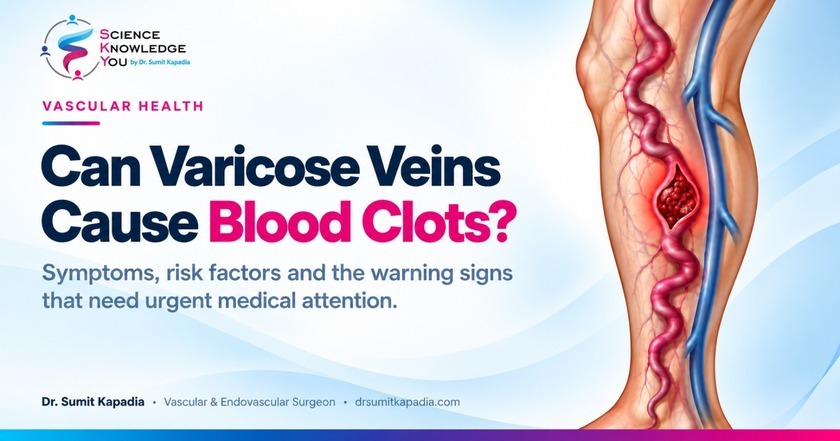
Are your leg veins trying to send you a warning? While varicose veins are common, they aren’t always harmless. They can sometimes point to deeper circulation issues and increase your risk for blood clots. Knowing what signs to look out for can make all the difference in keeping your legs and your overall health safe.
Key Takeaways
- Varicose veins raise the risk of clots, though most people never develop one.
- Surface clots are more common, while deep vein clots are rarer but more dangerous.
- A hard, red, tender vein in the leg needs prompt medical assessment.
- Sudden chest pain or breathlessness is an emergency, so seek help at once.
What Are Varicose Veins?
Varicose veins are swollen, twisted veins that show up under the skin, usually on the legs. Tiny one-way valves inside the veins normally push blood towards the heart. When those valves weaken, blood leaks backwards and collects in the vein, which stretches it and causes heaviness, aching and visible bulging.
Can Varicose Veins Cause Blood Clots?
Varicose veins are associated with a higher risk of blood clots, particularly deep vein thrombosis (DVT). A large cohort study found that people with varicose veins were more likely to develop DVT than those without them. Superficial vein clots are also a concern. In one large European study, around one in four patients diagnosed with a superficial vein clot had a concurrent deep vein clot.
How Do Varicose Veins Increase the Risk of Blood Clots?
Blood that pools in a stretched vein moves slowly. Slow movement, together with irritation of the vein lining, makes the blood more likely to clump. Once a clot forms, it can inflame the vein wall and, in some cases, extend towards the deeper veins.
Difference Between Superficial Blood Clots and Deep Vein Thrombosis (DVT)
| Feature | Superficial Vein Thrombosis | Deep Vein Thrombosis |
|---|---|---|
| Location | Vein just under the skin | Deep vein inside the muscle |
| Typical Signs | Tender, red, firm cord | Swollen leg, deep calf pain |
| Visible? | Usually yes | Often not obvious |
| Main Risk | Spread to deep veins | Pulmonary embolism |
| Urgency | See a doctor promptly | Needs urgent, same-day medical assessment |
Both conditions are managed differently, which is why the distinction matters.
What Are the Symptoms of Blood Clots in Varicose Veins?
Ordinary varicose veins tend to ache and feel heavy, and the discomfort builds up through the day. A clot feels different as the pain is sharper and stays in one spot. The skin may change colour, and the vein itself can feel hard. If your leg suddenly feels worse than it normally does, take that seriously.
Pain, Tenderness and Hard Lumps
A tender spot along a vein, with a firm, rope-like feel under the skin, often points to superficial thrombosis. Pressing on it usually hurts.
Swelling, Redness and Warmth in the Leg
Redness and warmth over a vein suggest inflammation around a clot. Swelling that spreads beyond the vein to the surrounding leg needs a proper check.
Warning Signs of Deep Vein Thrombosis
Swelling in one leg, deep calf pain, tenderness, or warmth in the affected area may indicate a blood clot. If you notice any of these symptoms, seek prompt medical assessment rather than waiting for them to resolve on their own.
What Are the Risk Factors for Blood Clots With Varicose Veins?
The risk of developing blood clots increases with certain medical conditions, life stages and lifestyle factors. Sitting or lying still for long stretches, a past clot, a recent operation, pregnancy, older age, obesity, cancer and hormone therapy also add to the risk. A family history of clotting disorders matters too.
How Are Blood Clots Associated With Varicose Veins Diagnosed?
The doctor starts by examining the leg and asking about symptoms and risk factors. A duplex ultrasound is the main test. It shows the veins, checks how blood is flowing and confirms whether a clot is present and how far it extends. A D-dimer blood test is sometimes added to help rule out DVT.
How Are Blood Clots Associated With Varicose Veins Treated?
Treatment depends on where the clot is and how long it is. Small surface clots may need only symptom relief, while longer ones or clots near deep veins call for stronger action. The aim is to stop the clot from spreading, ease pain and lower the chance of it happening again.
Blood-Thinning Medications
Anticoagulants are prescribed for deep clots and for longer superficial ones, often for several weeks, to prevent growth and complications.
Compression and Other Supportive Measures
Compression stockings, leg elevation, regular walking and anti-inflammatory medicines can reduce pain and swelling while the clot settles.
Varicose Vein Treatment Procedures
Once the clot is under control, the faulty vein can be closed with laser, radiofrequency ablation, glue or sclerotherapy to prevent recurrence.
How Can You Reduce the Risk of Blood Clots With Varicose Veins?
A few simple measures can help reduce the risk of blood clots and support healthy blood circulation:
- Stay active: Walk daily and stretch your calves regularly, especially during long periods of sitting or travel.
- Maintain a healthy weight: Excess weight increases pressure in the leg veins.
- Follow medical advice: Follow your doctor’s guidance, particularly around surgery or pregnancy.
When Should You Seek Medical Attention?
Recognising warning signs early can help prevent serious complications.
- Seek prompt medical attention for a hard, painful, red vein.
- Get one-sided leg swelling assessed without delay.
- Seek emergency care for chest pain or sudden breathlessness.
- Treat a rapid heartbeat or coughing up blood as a medical emergency, as these may indicate a pulmonary embolism.
Conclusion
Managing varicose veins involves more than reducing swelling. The recognition of symptoms of blood clots, as well as knowing one’s risk factors and getting timely medical attention, can go a long way towards avoiding complications.
FAQs
Most surface clots settle within a few weeks, though healing varies from person to person. Pain and redness usually ease first, while the firm, cord-like feel can linger longer. Deep vein clots take more time and are generally treated with blood thinners for at least three months.
Yes, it is possible. Pregnancy slows blood flow in the legs and makes blood clot more easily, and varicose veins can add to that risk. Any hard, painful or swollen leg during pregnancy needs prompt assessment by a doctor.
They can, particularly when the faulty vein is left untreated. Closing the diseased vein with laser, radiofrequency or glue can lower the chance of another clot, and regular movement helps too. Follow your doctor’s advice on medicines and follow-up visits.
No, you should not massage a varicose vein if you suspect a blood clot. Firm pressure or deep tissue massage can dislodge a clot from the vein wall, allowing it to travel through the bloodstream to the lungs and cause a life-threatening pulmonary embolism. If you notice a firm, red, or painful vein, keep your leg still, avoid rubbing the area, and seek immediate medical help.
Varicose veins do not directly cause blood clots purely because you are sleeping, but prolonged immobility overnight can contribute to blood pooling. When you lie still for long periods, muscle contractions in the legs stop, which slows venous blood flow. However, elevating your legs slightly and staying well-hydrated before bed can promote circulation overnight and help reduce this risk.

Dr. Sumit Kapadia
MBBS, MS, MRCS, DNB-Fellow