

Navigating the world of cancer treatments can be overwhelming. There are countless procedures, devices, and terms that patients need to familiarize themselves with. One such term is a “chemoport.” As patients prepare for their chemotherapy journey, understanding what a chemoport is and how it works becomes crucial. In this blog, we’ll unravel the concept of a chemoport, shedding light on its functionality, the process of its placement, its benefits, and what to expect throughout the procedure. We’ll also discuss the role of an experienced vascular surgeon like Dr. Sumit Kapadia in this process.
What is a Chemo Port?
A chemoport, often simply referred to as a port, is a small medical device that’s surgically inserted under the skin in the chest area. It provides direct access to a large central vein leading to the heart, making it a convenient channel to administer chemotherapy drugs. A port significantly reduces the discomfort and potential complications associated with repeated needle insertions in traditional chemotherapy methods
What do Chemo Ports Look Like?
A typical chemoport comprises two parts: a round, flat metal or plastic portal (about the size of a rupee coin) and a flexible tube known as a catheter. The portal has a septum (a self-sealing rubber disc) through which special needles are inserted to infuse medications or draw blood. The catheter connects this portal to a large central vein.
Also Read: Chemoport Insertion Procedure: Everything You Should Know
How Does Chemo Port Work? (in detail)
Chemo ports provide an efficient and safer way of administering chemotherapy drugs. The port is accessed using a special needle, which pierces the septum to reach the reservoir. The chemotherapy drugs are then injected into this reservoir and are carried into the bloodstream through the attached catheter.
Because the drugs are delivered into a large vein, they get diluted quickly by the blood, reducing the risk of vein irritation or damage that can occur when these medications are given through smaller peripheral veins. The port also allows for drawing blood for tests, eliminating the need for multiple needle pricks.
How is chemoport placed?
Usually, the procedure is performed under local anesthesia or mild sedation, in a dedicated sterile Operation theatre.
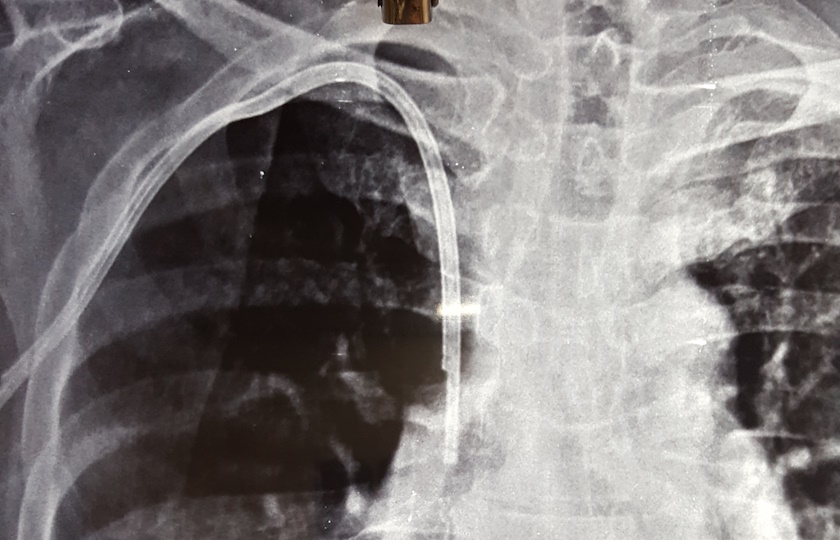
The neck vein is punctured under doppler guidance and a guide wire is passed till the heart. The catheter is passed over the wire and the position of the tip is checked under an X-ray or C-Arm. The other end of the catheter tunnelled beneath the collar bone and is connected to the portal, which is then implanted beneath the skin through a small incision.
What Happens During Chemo Port Placement?
The chemo port placement is done under local or general anesthesia by a skilled vascular surgeon like Dr. Sumit Kapadia. The surgeon makes a small incision in the chest area and another one in the neck or upper chest where the catheter is threaded into a central vein. The other end of the catheter is connected to the port which is then secured under the skin in the chest. The procedure typically takes 1-2 hours and most patients can go home the same day.
What are the Benefits of a Chemo Port?
The benefits of a chemo port are numerous:
- It reduces the discomfort associated with repeated needle pricks in traditional chemotherapy.
- It enables the administration of certain chemotherapy drugs that can only be delivered into large central veins.
- It minimizes the risk of damage to smaller veins.
- It allows for convenient blood draws.
- It can remain in place for long-term treatment.
Also Read: Why an AV fistula is Considered a Lifeline for Dialysis Patients?
Conclusion:
Chemo ports have significantly simplified the process of chemotherapy administration, improving patient comfort and enhancing the efficacy of treatment. Vascular surgeons like Dr. Sumit Kapadia are skilled in this procedure and are dedicated to ensuring patients have a smooth chemotherapy journey. Always have open discussions with your doctor regarding your treatment, and don’t hesitate to ask questions about anything you’re unsure about.
FAQS about Chemoport
A chemo port can stay in as long as a patient requires chemotherapy. It can be several months to a few years. Regular flushing of the port is necessary (with heparin, an anticoagulant) when it’s not in use to prevent clotting.
While chemo port placement is a surgical procedure, it is not considered major surgery. It’s an outpatient procedure, meaning patients typically go home the same day.
Once healed, the use of a chemo port usually causes minimal discomfort. The area may be numbed before accessing the port, and the needle insertion can feel like a slight pinch.
Follow us on YouTube


MBBS, MS, MRCS, DNB-Fellow
Dr. Sumit Kapadia
Dr. Sumit Kapadia / MR KAPADIA SUMIT a gold-medalist from Baroda Medical College, obtained his general surgical training and senior residency from SSG Hospital, Vadodara.
MBBS, MS, MRCS, DNB-Fellow
Dr. Sumit Kapadia
Dr. Sumit Kapadia / MR KAPADIA SUMIT a gold-medalist from Baroda Medical College, obtained his general surgical training and senior residency from SSG Hospital, Vadodara.