

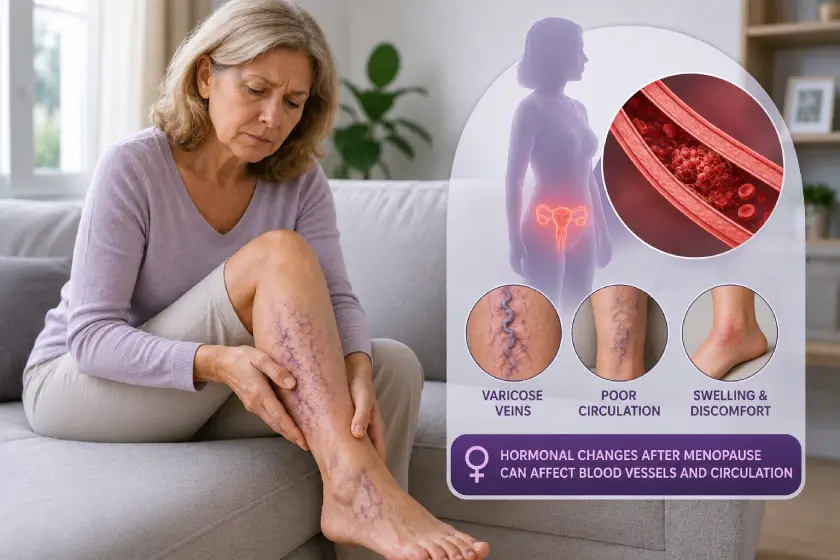
Many women expect menopause to bring changes such as hot flashes, mood swings, sleep disturbances, or weight gain. What often goes unnoticed is that some of the most important changes happen inside the blood vessels.
A woman may feel generally healthy and continue her daily routine without difficulty, yet changes within the vascular system may already be affecting circulation. This is one reason why a vascular problem may become more common in the years after a woman’s menopause.
The connection is not always obvious. Unlike joint pain or hot flashes, changes in vascular health develop gradually. However, these changes can influence circulation, blood pressure, vein health, and long-term cardiovascular health, and understanding why this happens is the first step toward maintaining a healthy vascular system after menopause.
Understanding the Vascular System and Vascular Aging in Women
The vascular system is the body’s network of arteries, veins, and capillaries that carries blood to every organ and tissue.
When this system functions well, oxygen and nutrients are delivered efficiently throughout the body. Blood vessels also help remove waste products and maintain healthy circulation.
Like every part of the body, blood vessels change with age. Over time, artery walls may become less flexible and less responsive. This natural process is known as vascular aging.
In women, vascular aging often becomes more noticeable after menopause because hormonal changes can influence how blood vessels function and how effectively they adapt to the body’s needs.
How Women Menopause Influences Blood Vessel Health
One of the lesser-known roles of estrogen is its effect on blood vessels.
Before women menopause, estrogen helps support vascular health by encouraging blood vessels to remain flexible and maintain healthy blood flow. It also contributes to the health of the inner lining of blood vessels, known as the endothelium.
As estrogen levels decline, these protective effects gradually decrease. Blood vessels may become stiffer, blood pressure may become harder to control, and circulation may become less efficient.
These changes do not happen overnight, but they help explain why the risk of developing a vascular problem increases after menopause.
Common Vascular Problems That Become More Frequent After Menopause
Several vascular conditions become more common during the post-menopausal years.
Some affect the veins, while others involve the arteries. In many cases, symptoms appear gradually and are often mistaken for normal signs of aging.
Recognizing these vascular health changes early can help prevent complications later.
Reduced Blood Flow and Circulation Changes
One of the most common effects of vascular aging is a gradual reduction in circulation efficiency.
Some women notice cold feet, heaviness in the legs, or fatigue during activities that previously felt easy. Others experience slower healing of minor injuries or reduced exercise tolerance.
While these symptoms may not always indicate serious disease, they can reflect changes occurring within the vascular system.
Reduced blood flow can also affect tissue health and overall circulation quality over time.
Increased Risk of Vein and Artery Conditions
After menopause, both vein-related and artery-related conditions become more common.
Varicose veins, chronic venous insufficiency, and leg swelling may develop as veins become less efficient at returning blood to the heart. At the same time, arteries may gradually develop plaque buildup, increasing the risk of peripheral artery disease and other circulation disorders.
This is where vascular health and cardiovascular health become closely connected.
Risk factors such as smoking, diabetes, obesity, high cholesterol, and high blood pressure can further increase the likelihood of developing a vascular problem.
How Hormonal Changes Affect Vascular Health and Cardiovascular Health
Hormonal changes influence far more than reproductive health.
As estrogen levels decline, changes occur within blood vessel walls. Arteries may lose some of their elasticity, and cholesterol levels may shift in an unfavorable direction. LDL cholesterol often increases, while protective HDL cholesterol may decrease.
Over time, these changes can affect both vascular health and cardiovascular health.
This helps explain why the risk of heart disease rises significantly after menopause. In fact, cardiovascular health becomes one of the most important aspects of women’s health during this stage of life.
Protecting blood vessels, therefore, plays an important role in maintaining long-term heart health.
Women Health Issues That May Increase the Risk of Vascular Disease
Several women’s health issues can increase vascular risk after menopause.
Diabetes is one of the most significant because high blood sugar can damage blood vessels over time. High blood pressure places additional strain on artery walls, while obesity contributes to inflammation and circulation problems.
Elevated cholesterol levels can further accelerate vascular aging and increase the risk of plaque formation inside arteries.
Women who have a family history of heart disease or vascular disease should be particularly mindful of regular health screenings and risk factor management.
Addressing these women health issues early can significantly improve vascular health outcomes.
When Medical Treatment Is Needed for a Vascular Problem
Not every vascular problem requires surgery or invasive treatment.
However, symptoms such as persistent leg pain, swelling, visible vein changes, wounds that heal slowly, or pain while walking should not be ignored. These may indicate underlying circulation issues that require medical attention.
Early diagnosis often allows treatment to begin before the condition progresses further.
Modern vascular care offers a range of treatment options depending on the type and severity of the vascular problem.
Minimally Invasive Procedures
Many vascular conditions can now be treated using minimally invasive procedures.
These treatments are designed to address circulation issues through small punctures or tiny incisions rather than traditional surgery. Recovery is often faster, and patients are usually able to return to daily activities sooner.
Minimally invasive treatments have transformed the way many vascular problems are managed today.
Understanding the Benefits of a Vascular Closure System
A vascular closure system is commonly used after certain vascular procedures.
Its role is to help seal the artery access site after treatment has been completed. Compared to traditional manual compression, a vascular closure system may improve comfort, reduce bleeding risk, and allow earlier mobility in selected patients.
Although patients may never see the device itself, it has become an important part of modern vascular treatment and recovery.
Tips for Maintaining a Healthy Vascular System After Menopause
Maintaining a healthy vascular system after menopause requires a long-term approach.
Regular physical activity helps improve circulation and slows the effects of vascular aging. Walking, swimming, cycling, and strength training all support better blood vessel function.
A balanced diet rich in fruits, vegetables, whole grains, and healthy fats supports both vascular health and cardiovascular health. Controlling blood pressure, cholesterol, and blood sugar levels is equally important.
Avoiding smoking remains one of the most effective ways to protect the vascular system from further damage.
Most importantly, women should not dismiss symptoms such as persistent leg swelling, heaviness, or circulation changes as simply a part of getting older.
Conclusion
Menopause is often viewed as a hormonal milestone, but it is also a turning point for vascular health.
As women’s menopause progresses, changes within the vascular system can contribute to vascular aging, circulation changes, and a higher risk of developing a vascular problem. These changes are natural, but they should not be ignored.
The encouraging news is that many vascular conditions can be prevented, delayed, or managed with timely intervention. By paying attention to vascular health, addressing women’s health issues early, and adopting habits that support a healthy vascular system, women can continue to protect both their circulation and cardiovascular health for years to come.
Frequently Asked Questions
Common vascular problems include varicose veins, chronic venous insufficiency, peripheral artery disease, leg swelling, heaviness in the legs, cold feet, and pain while walking.
Early signs may include unusual fatigue, shortness of breath, chest discomfort, reduced exercise tolerance, dizziness, and unexplained weakness.
Regular exercise, a healthy diet, weight management, blood pressure control, cholesterol management, and avoiding smoking can help reduce vascular risks.
Declining estrogen levels may contribute to vascular aging by reducing blood vessel flexibility, affecting circulation, and increasing cardiovascular risk factors.
Women should watch for symptoms such as leg swelling, visible vein changes, cold feet, pain while walking, slow-healing wounds, or unusual fatigue and seek medical advice if these occur.

Dr. Sumit Kapadia
MBBS, MS, MRCS, DNB-Fellow