The transition from healthy, active legs to the heavy, aching burden of venous disease can be subtle, but the risks are anything but minor. If you have ever spent an evening massaging your calves because of a persistent dull ache or noticed purple, bulging ropes snaking down your legs, you might be ignoring a ticking clock.
What looks like a simple sign of aging or fatigue could actually be a progressive medical condition that, if left untreated, leads to skin darkening, spontaneous bleeding, or even non-healing ulcers. These complications are far more than a cosmetic issue; they are a direct signal that your circulatory system is struggling to fight gravity.
Fortunately, the era of painful surgeries and long hospital stays is over, as early intervention now prevents these risks through modern treatments that are safe, quick, and minimally invasive.
What Are Varicose Veins?
To understand how to treat them, one must first understand that varicose veins are swollen, twisted veins that lie just under the surface of the skin. They occur when the tiny valves inside your veins, which are designed to keep blood flowing upward toward the heart, become weak or damaged.
Instead of moving forward, blood pools in the lower extremities, causing the veins to stretch and bulge under the pressure. This mechanical failure is most common in the legs because standing and walking significantly increase the pressure in the veins of the lower body.
Common Vascular Problems in the Legs
This underlying pressure often manifests as a variety of vascular problems in the legs that go beyond simple bulging. Many patients come to my clinic in Vadodara complaining of general discomfort without realizing they are facing chronic venous insufficiency.
Apart from varicose veins, individuals may suffer from spider veins, which are smaller and closer to the skin, or more serious inflammatory changes. In severe cases, this stagnant blood can cause the skin to become brittle or lead to the formation of dangerous blood clots.
Signs and Symptoms of Vein Weakness
Recognizing these issues early requires a keen eye for specific vein weakness symptoms that often appear before the veins become visible. Common indicators include:
- A heavy or leaden feeling in the legs, especially after physical activity.
- Burning, throbbing, or muscle cramping in the lower limbs.
- Increased pain after sitting or standing for a long duration.
- Itching around one or more of your veins.
- Swelling in the ankles and feet that subsides after a night’s rest.
- Discoloration of the skin around the ankles often turns a brownish hue.
When Do Varicose Veins Need Treatment?
While many people live with these mild symptoms for years, there is a definitive point where medical intervention becomes a necessity rather than a choice.
If you notice your legs feel heavy every single evening, or if the skin starts feeling hard and itchy, it is time to seek a professional opinion.
Treatment is mandatory if you develop sores or ulcers near the ankle, as these indicate that the venous pressure has reached a critical level. Taking action with proactive varicose veins treatment ensures that you maintain your mobility and avoid the permanent risks of infection.
Varicose Veins Treatment Options Available Today
The medical field has responded to these needs with an evolution in technology that has transformed how we manage venous diseases.
We no longer rely on the traditional stripping method, which involved large incisions and significant downtime. Instead, we focus on thermal and non-thermal techniques that are performed under local anesthesia, allowing for a much smoother patient experience.
Non-Surgical Treatment Options
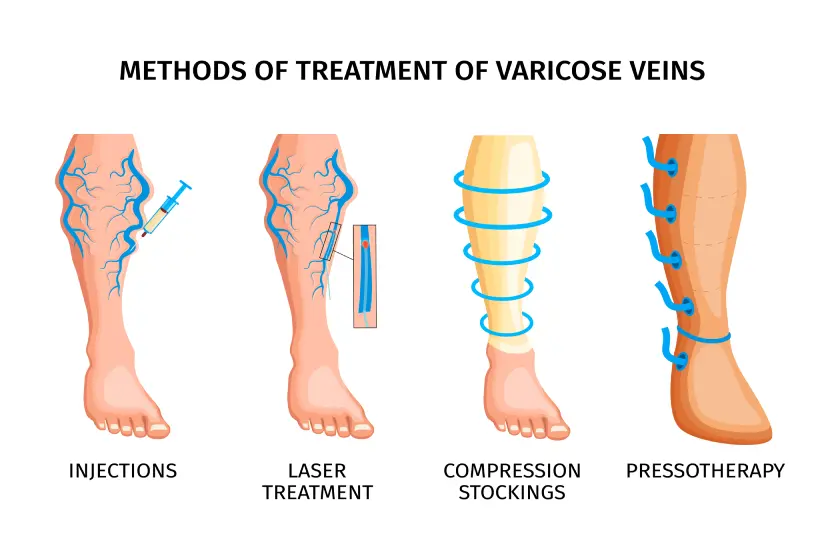
For patients in the very early stages of the disease, non-surgical treatment options like sclerotherapy are highly effective. This involves injecting a specialized foam solution into the vein, causing it to scar and close so the body can naturally reroute blood through healthier channels.
Additionally, compression stockings serve as a cornerstone of conservative management by assisting the valves in functioning better, though they are generally used to manage symptoms rather than provide a permanent cure.
Laser Treatment for Varicose Veins
When a more permanent solution is required for deeper issues, laser treatment for varicose veins, or EVLT, is currently considered the gold standard. This procedure uses a highly concentrated beam of light delivered through a thin fiber inserted into the damaged vein.
The laser energy generates controlled heat that seals the vein shut from the inside. Because the entire process is performed under ultrasound guidance, it ensures high precision and allows most patients to return to work within 24 to 48 hours.
Glue Treatment for Varicose Veins
Parallel to laser technology is one of the most innovative advancements in vascular surgery: the use of medical-grade adhesive. Glue treatment for varicose veins, often referred to as VenaSeal, involves injecting a small amount of specialized glue into the diseased vein to instantly seal the walls together.
Unlike laser therapy, this method does not require heat, which means there is no risk of thermal nerve injury, and patients typically do not even need to wear compression stockings after the procedure.
Laser vs Glue Treatment – Which Is Better?
Deciding between these two advanced paths depends on a careful evaluation of your specific anatomy and lifestyle.
| Feature | Laser Treatment (EVLT) | Glue Treatment (VenaSeal) |
|---|---|---|
| Mechanism | Uses heat to close the vein | Uses a medical adhesive to seal the vein |
| Anesthesia | Local or Tumescent anesthesia | Minimal local anesthesia |
| Compression | Stockings required for 1 to 2 weeks | Usually no stockings required |
| Risk of Heat | Minimal but present | Zero |
| Recovery | Very fast (1–2 days) | Immediate |
Both methods have success rates exceeding 95 percent, so the choice usually comes down to whether a patient prefers the cost efficiency of laser or the convenience of the glue method.
Varicose Veins Treatment Cost in Vadodara
Understanding these options naturally leads to the question of the varicose veins treatment cost in Vadodara. The price varies based on the technology used, the complexity of the case, and whether one or both legs require intervention.
Laser treatments are generally more affordable and are widely covered by most health insurance policies. Glue treatment, while offering a faster recovery without the need for stockings, carries a higher cost due to the specialized medical adhesive kits.
On average, you can expect a range starting from 50,000 to over 1,50,000 INR depending on the hospital facilities and chosen modality.
Why Consulting a Vascular Surgeon Matters
Because these costs and treatments involve the complex circulatory system, consulting a specialized vascular surgeon is vital. Many patients mistakenly visit general practitioners for what they perceive as a skin issue, but varicose veins are a structural problem of blood flow.
A specialist is uniquely trained to perform a Doppler ultrasound to interpret the hemodynamic flow and choose the correct intervention. This expertise ensures that you are not just treating the visible veins but addressing the root cause to prevent the condition from returning.
When Should You Seek Medical Help?
Ultimately, you should not wait for the pain to become unbearable before seeking this specialized help. Seek medical attention immediately if you experience sudden swelling in one leg, which could indicate a clot, or if a vein begins to bleed.
If you have a family history of vein problems or a job that involves standing for long hours, a preventive screening can save you from a lifetime of discomfort.
Conclusion: Modern Varicose Vein Treatments Are Simple and Effective
The fear of surgery should no longer be a barrier to achieving healthy legs and a pain-free life. Whether it is through advanced laser technology or the latest medical adhesives, we can now treat vascular issues with incredible precision.
Modern varicose vein treatments are simple, effective, and designed to get you back on your feet immediately. Your legs carry you through every stage of life, and it is my goal to ensure they remain strong enough to do so.
Frequently Asked Questions
Sclerotherapy is the most effective non-surgical approach for smaller veins, while compression stockings remain the best conservative tool for symptom management.
Neither is universally superior; laser is highly proven and cost-effective, while glue is ideal for those who wish to avoid post-procedure compression stockings.
The cost is generally higher than laser, often ranging between ₹1,80,000 and ₹3,50,000 per leg in India, depending on the specific equipment used.
Yes, the medical adhesive is biocompatible and has been used safely in various surgical procedures for decades.
Both endovenous laser treatment and glue therapy boast success rates over 95 percent, making them the most reliable options available today.

Dr. Sumit Kapadia
MBBS, MS, MRCS, DNB-Fellow