Many people think varicose veins are just a cosmetic problem. They notice the bulging blue veins on their legs and assume it’s something they simply have to live with. But what many patients don’t realize is that varicose veins can sometimes be a sign of an underlying circulation problem.
In my clinic, I often meet patients who ignored their symptoms for years. What started as visible veins gradually turned into aching legs, swelling around the ankles, and heaviness after standing for long hours. In more severe cases, untreated varicose veins can lead to skin changes, persistent swelling, and even ulcers that take a long time to heal.
The encouraging part is that treatment for varicose veins has advanced significantly in recent years. Today, we have effective options such as laser treatment for varicose veins, radiofrequency ablation vein treatment, and varicose veins surgery when necessary. Choosing the right approach depends on the condition of the veins and the symptoms a patient is experiencing.
In this article, I will explain the different treatment options for varicose veins in legs and how we determine which treatment may be most suitable.
What Are Varicose Veins and Why Do They Occur?
Varicose veins are enlarged, twisted veins that commonly appear on the legs. They develop when the valves inside the veins stop functioning properly.
Under normal circumstances, these valves help blood move upward toward the heart. When the valves weaken or become damaged, blood begins to flow backward and collect inside the vein. This causes increased pressure in the vein, which eventually leads to swelling and the characteristic bulging appearance.
Over time, this poor circulation can cause symptoms such as pain, heaviness, swelling, and fatigue in the legs. While many people initially see varicose veins as a cosmetic concern, they can sometimes progress and require proper treatment for varicose veins in legs to prevent complications.
Common Causes of Varicose Veins
Several factors can increase the risk of developing varicose veins.
One of the most common causes is prolonged standing or sitting. When a person stands for long periods, the veins in the legs must work harder to push blood back toward the heart.
Other common causes include:
- Family history of varicose veins
- Pregnancy
- Obesity
- Aging
- Hormonal changes
Often, varicose veins develop due to a combination of these factors rather than a single cause.
Treatment Options for Varicose Veins in Legs
When patients visit me seeking treatment for varicose veins, the first step is always a detailed evaluation. This typically includes a clinical examination and a vascular ultrasound to assess how the veins are functioning.
Treatment is usually recommended when varicose veins cause symptoms such as pain, swelling, skin discoloration, or ulcers. In some cases, patients also seek treatment for cosmetic reasons.
Today, the main options for treatment for varicose veins in legs include:
- Laser treatment
- Radiofrequency ablation (RFA)
- Traditional surgical procedures
Each method has its own advantages, and the most appropriate treatment depends on the severity and structure of the affected veins.
Treatment of Varicose Veins by Laser: Benefits and Recovery
The treatment of varicose veins by laser is one of the most widely used modern techniques.
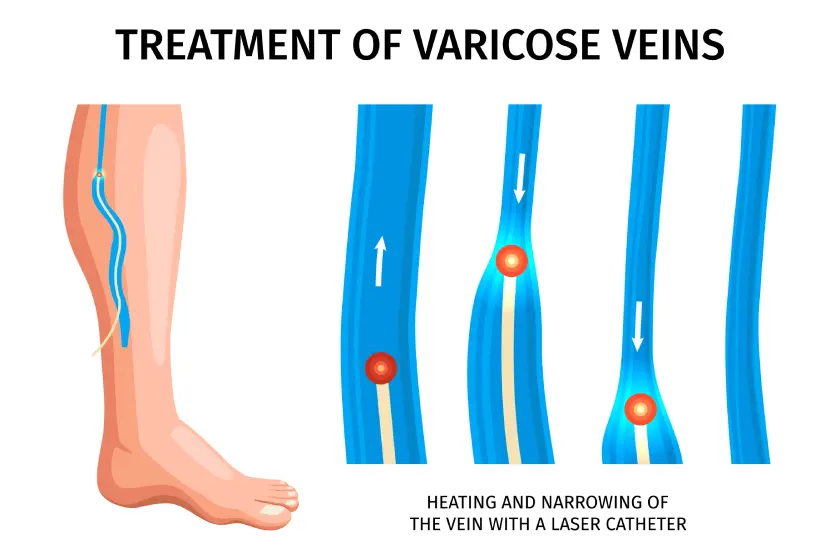
During this procedure, a thin laser fiber is inserted into the affected vein through a small puncture in the skin. The laser energy generates heat that causes the vein wall to collapse and seal shut. Once the vein is closed, blood naturally redirects to nearby healthy veins.
Laser treatment for varicose veins is minimally invasive and usually performed under local anesthesia.
Some key benefits include:
- Minimal incisions
- Short procedure time
- Less discomfort compared to traditional surgery
- Faster recovery
Most patients are able to resume normal activities within a few days, although compression stockings are usually recommended during the recovery period.
Treatment of Varicose Veins by RFA: Procedure and Advantages
Another commonly used technique is the treatment of varicose veins by RFA, also known as radiofrequency ablation vein treatment.
In this procedure, a thin catheter is inserted into the affected vein using ultrasound guidance. Instead of laser energy, controlled radiofrequency energy is used to heat the vein wall, causing it to collapse and close.
Once the vein is sealed, blood flow is redirected through healthier veins.
Radiofrequency ablation vein treatment has become a popular option because it is minimally invasive and often associated with less discomfort.
Advantages of treatment of varicose veins by RFA include:
- Small puncture instead of surgical incisions
- Reduced pain after the procedure
- Quick recovery time
- High success rate in closing problematic veins
Many patients can return to their daily routine within a short period after the procedure.
Treatment for Varicose Veins Surgery: Risks and Benefits
Although minimally invasive procedures are widely used today, treatment for varicose veins surgery may still be recommended in certain situations.
Traditional varicose veins surgery typically involves tying off and removing the affected vein through small incisions. This procedure is known as ligation and vein stripping.
Surgical treatment may be considered when veins are extremely large or when minimally invasive treatments are not suitable.
The benefits of treatment for varicose veins surgery include long-term removal of the problematic vein. However, compared to laser or RFA procedures, surgery may involve:
- Larger incisions
- Longer recovery time
- Temporary bruising or discomfort
For this reason, many patients today prefer minimally invasive treatments when they are appropriate.
Laser vs RFA vs Surgery: Which Is Best for Varicose Veins?
Patients often ask which option is the best.
The answer depends on several factors, including the size of the veins, the severity of symptoms, and the overall health of the patient.
In many cases, laser treatment for varicose veins and radiofrequency ablation vein treatment are preferred because they are minimally invasive and provide faster recovery.
However, varicose veins surgery may still be recommended for certain complex cases where other treatments are not suitable.
A detailed ultrasound evaluation helps determine the most effective treatment plan for each patient.
Recovery and Aftercare for Varicose Vein Treatments
Recovery after modern varicose vein procedures is usually smooth and relatively quick.
Most patients are encouraged to start walking shortly after the procedure because movement helps improve circulation and reduce the risk of complications.
Doctors often recommend:
- Wearing compression stockings
- Avoiding prolonged standing for a few days
- Walking regularly to promote circulation
- Attending follow-up appointments
Following these instructions helps ensure that the treated veins heal properly and that blood circulation improves.
Conclusion
Varicose veins are more than just a cosmetic concern. When left untreated, they can gradually lead to discomfort, swelling, and complications affecting the skin and circulation.
Fortunately, several effective options are available today for the treatment for varicose veins, including laser treatment for varicose veins, treatment of varicose veins by RFA, and treatment for varicose veins surgery when necessary.
The best treatment depends on the condition of the veins and the symptoms experienced by the patient. Consulting a qualified varicose vein specialist in Vadodara can help identify the most suitable treatment and prevent the condition from progressing.
Frequently Asked Questions
For large varicose veins, procedures such as radiofrequency ablation vein treatment, laser treatment for varicose veins, or varicose veins surgery may be recommended depending on the severity and structure of the veins.
Minimally invasive procedures such as treatment of varicose veins by laser and treatment of varicose veins by RFA are generally considered safe and effective for most patients.
The two most common causes are weakened vein valves and increased pressure in the leg veins due to prolonged standing, genetics, aging, or pregnancy.
Laser treatment for varicose veins is highly effective, with success rates typically ranging between 90% and 95% in suitable candidates.
Recovery from radiofrequency ablation vein treatment is usually quick, and most patients return to normal activities within a few days.
Traditional varicose veins surgery, such as ligation and vein stripping, may be recommended when minimally invasive procedures are not suitable.

Dr. Sumit Kapadia
MBBS, MS, MRCS, DNB-Fellow