

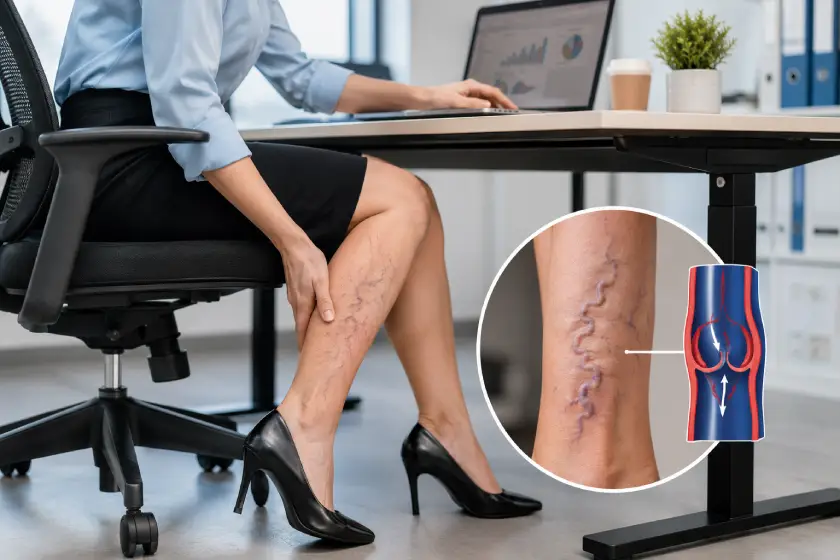
Most office workers do not think about vein health until the symptoms start interfering with daily life.
It usually begins in small ways. A feeling of heaviness in the legs after work. Mild leg swelling around the ankles by evening. Sometimes people notice visible veins on legs and assume it is only a cosmetic issue.
The problem is that long sitting hours affect circulation more than many realize. When movement reduces day after day, blood does not flow as efficiently through the legs, and this gradually increases pressure inside the veins.
Over time, these circulation problems may lead to discomfort, swelling, and eventually varicose veins if ignored for too long.
Why Office Workers Face a Higher Risk of Varicose Veins
Varicose veins develop when veins struggle to push blood back towards the heart effectively.
Normally, the muscles in the legs help circulation by supporting blood flow upward. In office workers, long periods of sitting reduce this muscle activity. Blood tends to collect in the lower legs instead of circulating efficiently.
Over time, pressure inside the veins increases. This can eventually lead to enlarged or visible veins on legs, especially in people who already have a family history or other risk factors.
Weight gain, lack of exercise, and poor posture can make the problem worse.
Why Sitting for Long Hours Can Lead to Circulation Problems
The body is designed for movement. Sitting continuously for several hours slows circulation, especially in the lower limbs.
When the legs remain still for long periods, blood flow becomes less efficient. This contributes to circulation problems and increases pressure inside the veins.
Many office workers notice symptoms towards the end of the day because circulation has been reduced for hours without enough movement.
Even crossing the legs for prolonged periods may worsen pressure in some individuals.
How Poor Blood Flow and Circulation Problems Contribute to Leg Swelling
Leg swelling is one of the most common early signs of poor circulation.
When blood does not move efficiently back towards the heart, fluid starts collecting in the lower part of the legs. This is why swelling is usually more noticeable around the ankles or feet.
Patients often say the swelling improves slightly after resting or elevating the legs. That temporary improvement is usually a sign that circulation is involved.
Over time, untreated circulation problems may increase discomfort and visible vein changes.
The Difference Between Normal Fatigue and Leg Swelling
Many people assume swelling and heaviness are simply due to a long workday, but there is a difference between routine fatigue and ongoing circulation issues.
Fatigue generally improves after rest without persistent swelling or discomfort. Circulation-related symptoms tend to occur repeatedly and may gradually worsen over time.
Leg Swelling After Sitting at the Desk All Day
Leg swelling after sitting at desk all day is very common in office workers.
The lack of movement allows fluid to collect in the lower limbs. Some people notice tightness around the ankles, while others feel heaviness or stiffness while getting up after long hours.
These symptoms may appear mild initially, but repeated daily swelling should not be ignored.
Leg Swelling After Standing All Day
Leg swelling after standing all day can also occur because veins remain under constant pressure.
This is commonly seen in professionals who alternate between long sitting hours and prolonged standing periods. Blood tends to pool in the lower legs when circulation is not efficient enough to push it upward properly.
Swelling that happens regularly may indicate underlying vein strain or circulation problems.
Can Varicose Veins Lead to Blood Clots in the Leg?
Varicose veins themselves do not always cause blood clots, but they can increase the risk in some patients.
Reduced blood flow and pooling inside damaged veins may contribute to clot formation. This is why doctors pay attention to symptoms of blood clots such as sudden swelling, warmth, redness, or pain in one leg.
Blood clots in the leg require prompt medical evaluation because delayed treatment can lead to serious complications.
Not every patient with varicose veins develops clots, but persistent symptoms should always be assessed properly.
Expert Tips to Improve Leg Circulation at Work
Small changes during the workday can significantly improve leg circulation.
Standing up every 30 to 45 minutes helps activate the leg muscles and improves blood flow. Short walks, ankle movements, and stretching exercises are also useful.
Hydration matters more than people expect. Tight clothing around the waist or legs should also be avoided for long periods.
Some office workers benefit from compression stockings, especially if they already have visible veins on legs or mild swelling.
Exploring Safe and Effective Varicose Veins Treatment Options
There are several varicose veins treatment options available today, depending on the severity of the condition.
In the early stages, lifestyle modifications and compression therapy may help control symptoms. Patients are often advised to improve movement, manage weight, and avoid prolonged sitting.
For more advanced cases, minimally invasive varicose veins treatment procedures such as laser therapy or radiofrequency treatment may be recommended. These procedures aim to close damaged veins and improve circulation.
The right varicose veins treatment depends on proper evaluation and the patient’s overall vascular health.
When Should You Consult a Vein Specialist?
It is advisable to consult a vein specialist if symptoms become persistent or begin affecting daily comfort.
Visible veins on legs, recurring leg swelling, heaviness, or pain should not be ignored. Sudden swelling or symptoms of blood clots require urgent evaluation.
Early assessment usually makes varicose veins treatment simpler and helps prevent progression.
Conclusion
Varicose veins are not limited to people who stand all day. Office workers are equally at risk because prolonged sitting quietly affects circulation over time.
What starts as occasional heaviness or mild leg swelling can gradually turn into more persistent circulation problems. The good part is that early attention makes a significant difference.
Simple changes during the workday, combined with timely varicose veins treatment when needed, can help improve leg circulation and reduce long-term vein damage.
Frequently Asked Questions
The doctor will usually assess symptoms, examine the veins, and may recommend a Doppler ultrasound to evaluate blood flow.
Regular movement, stretching, short walks, hydration, and avoiding prolonged sitting can help improve leg circulation.
Medical evaluation is recommended if swelling becomes frequent, painful, or associated with visible veins or skin changes.
Long standing hours increase pressure inside the veins, which can lead to fluid accumulation and swelling.
Occasional swelling may not be serious, but repeated or worsening swelling can indicate underlying circulation problems or vein disease.

Dr. Sumit Kapadia
MBBS, MS, MRCS, DNB-Fellow