

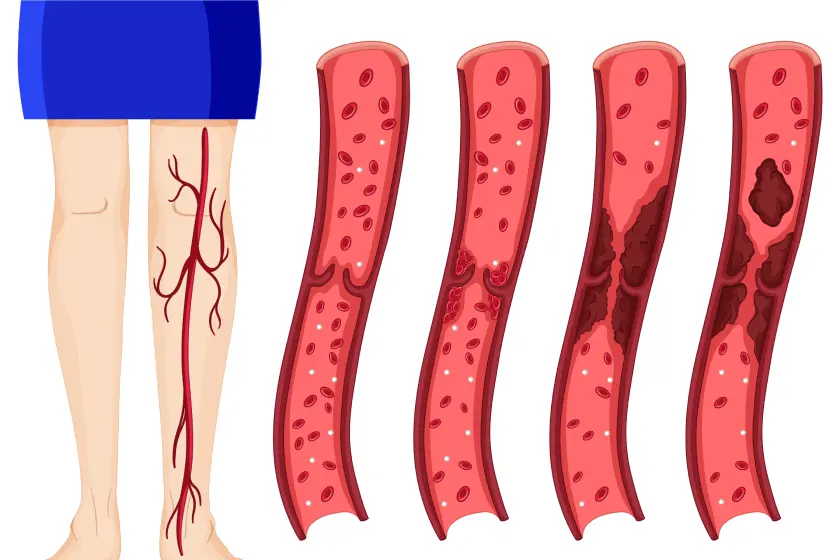
In my practice, I often see patients who are surprised to learn that their symptoms are related to problems in the arteries. Leg pain while walking, wounds that take too long to heal, or unexplained abdominal discomfort can sometimes point to aneurysms or artery blockages.
These conditions usually develop slowly, which is why many people do not notice them until blood flow becomes significantly affected. The good news is that treatment has advanced considerably. Today, many vascular problems can be managed with endovascular treatment, a minimally invasive approach that allows us to treat arteries from within the blood vessel itself.
In this article, I’ll explain how endovascular surgery helps manage aneurysms and arterial disease and why it has become an important option in modern vascular care.
Understanding Aneurysms and Artery Blockages
To understand the importance of treatment, it helps to know what happens inside the arteries.
An aneurysm occurs when a section of an artery wall becomes weak and begins to bulge outward. When I explain this to patients, I often compare it to a weak spot in a pipe that slowly expands under pressure. If the bulging area continues to grow, the artery wall may become thin, and there is a risk of rupture.
Aneurysms most commonly develop in the aorta, which is the main artery carrying blood from the heart. They can also occur in other arteries in the body.
Artery blockages, on the other hand, develop when fatty deposits gradually build up inside the artery walls. This buildup, called plaque, narrows the artery and restricts the flow of blood.
When blood flow becomes limited, tissues and organs may not receive enough oxygen. This is why patients with blocked leg arteries often experience pain while walking. Without proper arterial blockage treatment, these conditions can eventually lead to serious complications.
What Causes Aneurysms and Artery Blockages in the Body?
In most cases, vascular disease develops gradually due to a combination of medical conditions and lifestyle factors.
High blood pressure is one of the most common contributors. Over time, constant pressure inside the arteries can weaken the vessel walls.
Smoking is another significant risk factor. It damages blood vessels and accelerates plaque formation inside the arteries.
Conditions such as diabetes and high cholesterol also increase the likelihood of vascular disease. Elevated blood sugar can damage blood vessels, while cholesterol contributes to plaque buildup.
Age is another factor. As people grow older, arteries naturally lose some of their elasticity and become more vulnerable to narrowing or weakening.
In some cases, genetics may also play a role, particularly in the development of aneurysms.
Symptoms of Artery Blockages That Require Immediate Attention
One challenge with vascular disease is that symptoms may not appear until the blockage becomes significant.
However, there are certain artery blockages symptoms that should not be ignored.
One of the most common signs I see is pain in the legs while walking. Patients often describe it as a cramping or tight feeling in the calves that improves when they stop and rest.
Other symptoms may include:
- Weakness in the legs
- Coldness in the feet or lower leg
- Slow-healing wounds on the feet
- Numbness in the limbs
- Reduced pulses in the legs
Aneurysms may not always cause symptoms in the early stages. However, as they grow larger, patients may experience abdominal pain, back pain, or a pulsating feeling in the abdomen.
Sudden severe pain should always be taken seriously and evaluated immediately.
Diagnosis Methods for Detecting Aneurysms and Arterial Blockages
When patients come in with symptoms or risk factors, we rely on imaging tests to evaluate the arteries.
A vascular ultrasound is often the first step. It allows us to assess blood flow and detect narrowing or aneurysms in a non-invasive way.
For more detailed imaging, we may use CT angiography, which provides clear pictures of the arteries and helps identify the exact location of blockages or aneurysms.
Another option is MR angiography, which uses magnetic imaging to visualize blood vessels.
In some cases, we perform angiography, where contrast dye is injected into the arteries so that blood flow can be seen clearly on imaging.
These tests help us determine the severity of the condition and whether endovascular surgery may be the most suitable treatment approach.
What Is Endovascular Treatment for Arterial Conditions?
Endovascular treatment refers to procedures that are performed from inside the blood vessels.
Instead of making a large surgical incision, we access the artery through a small puncture, usually in the groin. A thin catheter is then guided through the blood vessels using imaging.
Once the catheter reaches the affected area, different procedures can be performed depending on the condition.
For narrowed arteries, we often perform angioplasty, where a small balloon is inflated to widen the artery. In many cases, a stent is placed to help keep the artery open.
For aneurysms, a stent graft can be inserted to reinforce the weakened artery wall and reduce the risk of rupture.
Because this approach works from inside the blood vessels, it allows us to treat vascular disease in a less invasive way.
Endovascular Therapy for Aneurysms and Arterial Blockages
Over the years, endovascular therapy for aneurysms has become an important part of vascular treatment.
In many patients, we perform a procedure known as endovascular aneurysm repair. During this procedure, a stent graft is placed inside the artery to support the weakened section and prevent it from expanding further.
Similarly, for blocked arteries, angioplasty and stenting are commonly used to restore blood flow.
These procedures are performed using imaging guidance and usually require only a small puncture rather than large surgical incisions.
Benefits of Endovascular Treatment Compared to Open Surgery
There are several reasons why endovascular surgery is widely used today.
Because the procedure is minimally invasive, patients typically experience less discomfort afterward. Hospital stays are usually shorter compared to traditional open surgery.
Recovery time is also faster, which allows patients to return to their normal routine sooner.
Another advantage is that there is generally less blood loss during the procedure.
However, every patient is different, and the suitability of endovascular treatment depends on several factors, including the location of the aneurysm or blockage and the patient’s overall health.
Recovery and Care After Endovascular Surgery
Recovery after endovascular treatment is generally quicker than after open vascular surgery.
Most patients are able to return home within a day or two after the procedure.
Even after treatment, maintaining vascular health is very important. I usually advise patients to control blood pressure, manage cholesterol levels, and maintain regular physical activity.
Quitting smoking and following a healthy diet can also reduce the risk of further arterial disease.
Regular follow-up visits and imaging tests help ensure that the treated artery remains stable over time.
Conclusion
Aneurysms and arterial blockages are serious conditions, but with early diagnosis and proper treatment, they can often be managed effectively.
Advances in endovascular treatment have transformed the way many vascular conditions are treated. Procedures that once required major surgery can now often be performed using minimally invasive techniques.
Recognizing artery blockages symptoms early and seeking medical evaluation can make a significant difference. With modern endovascular therapy for aneurysms and arterial disease, we are able to treat many vascular problems safely while helping patients recover faster.
Frequently Asked Questions
Endovascular treatment is a minimally invasive procedure used to treat blood vessel diseases from inside the arteries using catheters, balloons, stents, or grafts.
Many aneurysms do not cause symptoms initially. However, some patients may notice abdominal pain, back discomfort, or a pulsating sensation in the abdomen.
Common warning signs include leg pain while walking, numbness in the limbs, cold feet, slow-healing wounds, and reduced circulation.
Possible risks include bleeding, infection, blood clots, or reactions to contrast dye, although these complications are relatively uncommon.
Most patients recover within one to two weeks, and many are discharged from the hospital within 24 to 48 hours.
The cost of endovascular treatment in India varies depending on the procedure and devices used, but it typically ranges between ₹1.5 lakh and ₹10 lakh.

Dr. Sumit Kapadia
MBBS, MS, MRCS, DNB-Fellow