

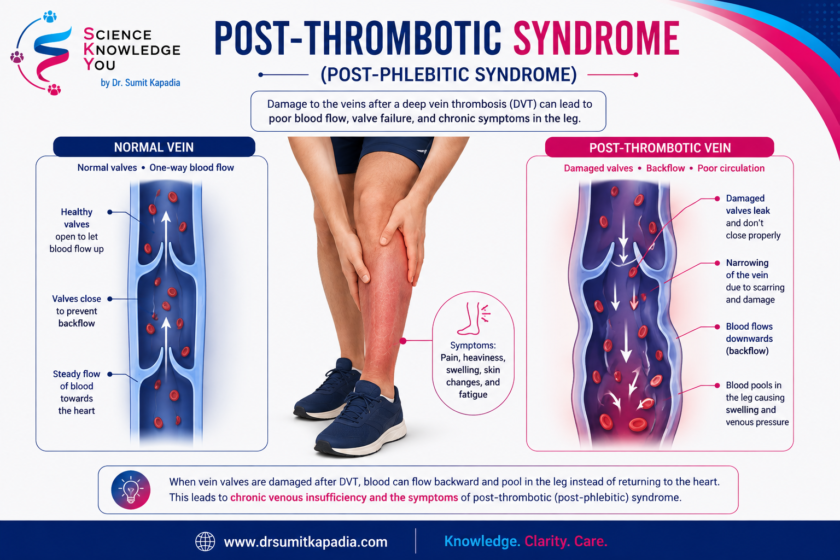
Post-thrombotic syndrome is a long-term complication of deep vein thrombosis (DVT) in which the affected leg stays painful, swollen, and heavy long after the original clot has been treated. In severe cases, the skin breaks down into an ulcer. It develops because the clot injures the vein and the valves inside it, leaving blood to collect under abnormally high pressure.
Key Takeaways
- Post-thrombotic syndrome (PTS) develops after a deep vein thrombosis (DVT), usually within two years. Sometimes PTS may even develop 4 to 5 years after the initial thrombosis.
- The problem is damaged vein valves and raised pressure in the leg veins.
- Diagnosis is clinical, usually confirmed with the Villalta score.
- Compression, walking, and weight management form the basis of treatment.
- Severe cases with blocked veins may need angioplasty or stenting.
- Completing your anticoagulant course remains the most reliable protection.
What is Post-Thrombotic Syndrome?
PTS Full Form in Medical
PTS is the accepted medical abbreviation for post-thrombotic syndrome, used throughout discharge summaries and clinical correspondence. It follows deep vein thrombosis (DVT), a blood clot in a deep leg vein. Anticoagulant treatment prevents the clot from extending and allows the body to dissolve it, but the vein wall and the delicate valves inside are frequently scarred in the process.
Those valves normally open to let blood travel upward towards the heart and close to stop it falling back. Once damaged, blood refluxes downward and pools around the calf and ankle under abnormally high pressure. That pressure produces the aching, heaviness, and swelling patients describe months after treatment. The end state is chronic venous insufficiency, traced here to a previous thrombosis.
What Causes Post-Thrombotic Syndrome?
Post-thrombotic syndrome arises from two problems that usually act together. The scarred vein remains partly narrowed, so blood struggles to leave the leg, and the injured valves no longer prevent backflow.
Both result in increased pressure in the leg veins, a condition called venous hypertension that underlies all the symptoms discussed below. That pressure forces fluid and inflammatory cells into the surrounding tissue, which explains the swelling and, over years, the skin changes.
Factors that make post-deep vein thrombosis syndrome more likely include:
- Delayed diagnosis or poorly controlled anticoagulant treatment for the original clot
- A second clot in the same leg, which raises risk substantially
- Large clots in the thigh or pelvic veins rather than the calf
- Obesity and a raised body mass index
- Older age at the time of the DVT
- Prolonged immobility
Post Thrombotic Syndrome Symptoms
Symptoms of post thrombotic syndrome rarely appear overnight. Instead, they develop gradually over months, typically worsening after prolonged standing or walking and improving with leg elevation or overnight rest.
Early Symptoms
- Heaviness or tiredness in the affected leg
- Mild swelling around the ankle and lower calf
- Aching pain that intensifies through the day
- Cramping or a tight, bursting sensation in the calf muscle
- Itching or a pins-and-needles feeling
Advanced Symptoms
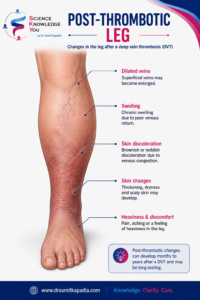
- Brown or reddish discolouration of the skin above the ankle
- Thickening and hardening of the skin and underlying fat
- Persistent swelling that no longer settles overnight
- Venous eczema with dryness, scaling and irritation
- Venous ulcers, most often just above the inner ankle bone
Ulceration affects only a minority, but it is the reason early symptoms should not be dismissed.
Who is at Risk of Developing PTS Disease?
Anyone who has had a DVT carries some risk, though it is not distributed evenly. Post-thrombotic syndrome is more likely in people with:
- A previous DVT, particularly one in the thigh or pelvic veins
- A repeat clot in the same leg
- Obesity or a raised body mass index
- Older age
- Pregnancy-associated or hormone-related thrombosis
- Pre-existing varicose veins or venous disease
- Delayed or interrupted anticoagulant therapy
Knowing you fall into one of these groups is useful mainly because it lowers the threshold for seeking review when leg symptoms persist.
How is Post-Thrombotic Syndrome Diagnosed?
There is no blood test or scan that confirms the diagnosis. It rests on the pattern of symptoms and signs in a leg known to have had a DVT.
Medical History and Physical Examination
Your doctor will ask when the clot occurred, which veins were involved and how the leg has behaved since, then examine it for swelling, tenderness, discolouration and ulceration.
Diagnostic Tests
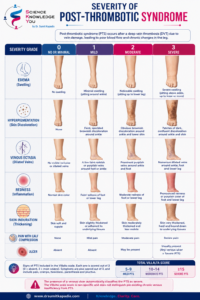
- Villalta score: The standardised scale grading five symptoms and six clinical signs, accepted internationally for diagnosis and severity rating.
- Duplex ultrasound and venous Doppler: Used to identify residual obstruction or valve reflux, and to rule out a fresh clot.
Post-Thrombotic Syndrome Treatment
Conservative Treatment
Graduated compression stockings are the first measure offered once symptoms are established and relieve swelling and discomfort in many patients. Alongside them, regular walking, calf-strengthening exercise, elevating the leg at rest, and losing excess weight all lower venous pressure and improve daily function.
Medical Treatment
Simple analgesia may be used for pain where appropriate. Anticoagulants prevent further clots but do not reverse established damage, so they are continued only where an ongoing indication exists. Regular emollients help prevent eczema and ulceration, and any ulcer needs specialist wound care.
Advanced Treatment
A small number of patients have a major blockage in one of the large veins of the pelvis or thigh. If symptoms remain severe despite compression therapy, a vascular specialist may consider angioplasty and stenting to improve blood flow out of the leg. Published studies report high technical success rates, although not everyone experiences the same degree of symptom relief.
One caution is worth stating plainly: clot-dissolving treatment given during the acute DVT does not reduce the overall rate of post-thrombotic syndrome. It raises bleeding risk, so it is reserved for selected patients. Any decision to intervene belongs with a vascular specialist.
Can Post-Thrombotic Syndrome be Prevented?
Prevention works best at the time of the original clot, not afterwards. Here are a few practical steps that can be followed:
- Seeking prompt attention for unexplained leg swelling or pain
- Completing the full anticoagulant course without interruption
- Walking regularly once your doctor permits
- Maintaining a healthy weight
- Attending vascular follow-up
Conclusion
Post-thrombotic syndrome is a common long-term complication of DVT, but early diagnosis and timely treatment can significantly reduce its impact. Along with medical care, consistent use of compression stockings, regular exercise, and maintaining a healthy weight play an important role in managing symptoms and preventing progression.
If swelling, pain, skin changes, or heaviness persist after a DVT, don’t ignore them. Consult a vascular surgeon for a proper evaluation, as early intervention can help prevent complications and improve your quality of life.
Frequently Asked Questions
The underlying vein damage is usually permanent, but the symptoms are not fixed in severity. With consistent compression, exercise, and weight management, most patients see meaningful improvement, and some become largely symptom-free.
Heaviness, aching, and mild ankle swelling that appear after standing or walking and ease when the leg is elevated. These typically develop within the first one to two years after the clot.
Untreated disease can progress to permanent swelling, thickened and discoloured skin, venous eczema and eventually venous leg ulcers, which heal slowly and tend to recur. Quality of life and mobility are often significantly affected.
There is no single best treatment. Compression therapy combined with regular walking, leg elevation, and weight management helps the majority. Angioplasty and stenting are considered when a major vein remains obstructed, and symptoms persist.
This is not an illness that resolves on a fixed timeline. Symptoms usually stabilise within one to two years of the DVT, after which the aim shifts to controlling them consistently rather than expecting the vein damage to reverse.
Post-Thrombotic Syndrome (PTS) is a long-term medical condition that develops as a complication of a deep vein thrombosis (DVT) in the leg. It refers to a cluster of persistent symptoms, such as chronic swelling, pain, heaviness, and skin discolouration, caused by long-term damage to the leg’s internal vein walls and valves following a blood clot.
Yes, they are identical. Post deep vein thrombosis syndrome (sometimes called post-DVT syndrome) is simply another name for post-thrombotic syndrome (PTS). Both terms describe the chronic venous insufficiency and leg pressure that result from a previous DVT.
Yes. Regular, low-impact exercise, especially walking and calf-strengthening routines, is one of the most effective non-surgical ways to manage PTS. Your calf muscles act as a natural “pump” that pushes blood upward toward the heart. Strengthening these muscles reduces blood pooling, lowers venous pressure, and significantly eases swelling and aching. To help you get started, check out this video guide on post-thrombotic syndrome exercises.
You should consider seeing a vascular specialist if your leg symptoms fail to improve or continue to worsen despite standard conservative measures, such as wearing graduated compression stockings, staying active, and elevating your leg at rest. An evaluation is especially important if you notice advancing skin changes above the ankle or if you develop an open sore or venous leg ulcer. A vascular specialist can perform detailed diagnostic imaging to check for severe, blocked veins and rule out a new clot. They will also determine whether advanced interventions like angioplasty or stenting could help restore proper blood flow and improve your quality of life.

Dr. Sumit Kapadia
MBBS, MS, MRCS, DNB-Fellow