

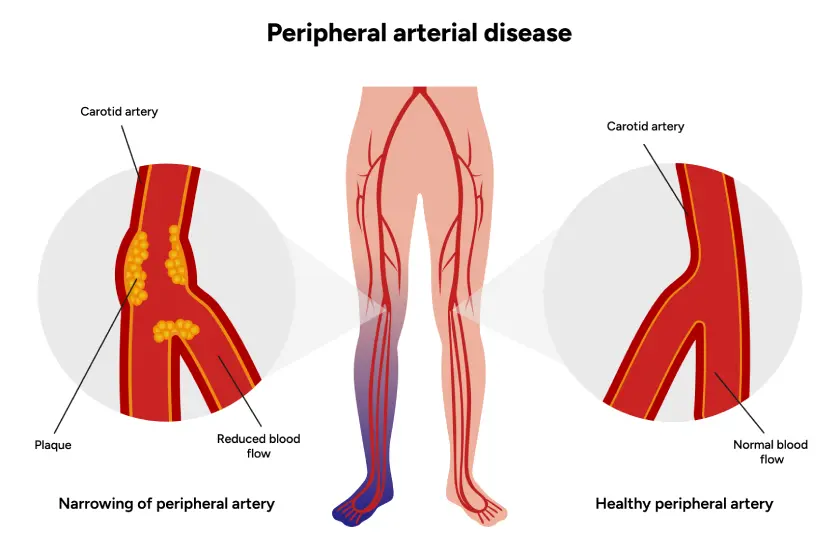
Leg pain while walking is something many people brush off as fatigue or age. But when that discomfort keeps returning, or when your feet start feeling unusually cold or heavy, it may be a sign of peripheral arterial disease.
This condition develops when plaque narrows the arteries that supply blood to the legs, leading to poor blood circulation in legs and other leg circulation problems.
In this article, I’ll explain how PAD in legs affects circulation, the peripheral artery disease symptoms to watch for, and what treatment options can help restore healthy blood flow.
How Peripheral Arterial Disease Affects Blood Circulation in the Legs
Healthy arteries carry oxygen-rich blood from the heart to the legs and feet. This blood supply keeps muscles functioning and helps tissues repair themselves.
In peripheral arterial disease, plaque gradually builds up inside the arteries. This buildup narrows the blood vessels and restricts circulation. As a result, the legs may not receive enough oxygen, especially during physical activity.
When patients have PAD in legs, the muscles begin to tire more quickly because they are not receiving adequate blood flow. This reduced circulation often leads to pain while walking, commonly known as claudication.
If the condition continues to progress, blocked leg arteries can significantly affect mobility and overall leg health.
Types of Peripheral Arterial Disease
There are different types of peripheral arterial disease, depending on the severity of the blockage and the symptoms experienced.
Asymptomatic PAD
Some individuals have narrowed arteries but do not notice symptoms in the early stages.
Intermittent Claudication
This is one of the most common forms of PAD in legs. Patients experience cramping or pain in the calves while walking, which improves with rest.
Critical Limb Ischemia
This is a more advanced stage where blood flow becomes severely limited. Patients may experience constant pain in the legs or feet, along with wounds that heal very slowly.
Understanding these types of peripheral arterial disease helps doctors determine the most appropriate treatment approach.
Peripheral Artery Disease Symptoms and Early Warning Signs
Recognizing peripheral artery disease symptoms early can help prevent the condition from worsening.
Some common warning signs include:
- Pain or cramping in the legs while walking
- Weakness or fatigue in the legs
- Coldness in the feet or lower legs
- Numbness or tingling sensations
- Slow-healing cuts or wounds on the feet
- Changes in skin color or texture on the legs
These symptoms often indicate leg circulation problems caused by narrowing or blocked leg arteries.
When these warning signs appear, a medical evaluation is important to determine whether PAD symptoms and treatment are needed.
PAD in Legs: How It Affects Blood Circulation and Leg Health
When PAD in legs progresses, it can gradually affect the overall health of the lower limbs.
Reduced circulation means that muscles receive less oxygen during movement. This often results in fatigue, pain, or cramping during walking or exercise.
Over time, poor circulation may also affect the skin and nerves. Patients may notice dryness, discoloration, or slower healing of small injuries.
Without proper peripheral arterial disease treatment, severe circulation problems can eventually lead to ulcers or infections in the legs or feet.
Poor Blood Circulation in Legs: Symptoms and Risks
Poor blood circulation in legs can cause symptoms that gradually worsen if left untreated.
Some common signs include:
- Persistent leg pain or cramping
- Cold feet or lower legs
- Numbness or tingling sensations
- Swelling in the legs
- Slow-healing wounds
When circulation becomes severely limited, tissues may not receive enough oxygen to heal properly. In advanced cases of peripheral arterial disease, this can increase the risk of infections and other complications.
Recognizing these symptoms early allows doctors to begin peripheral arterial disease treatment before serious damage occurs.
Tips to Improve Blood Circulation and Leg Health
Maintaining good circulation plays an important role in preventing and managing leg circulation problems.
Some simple lifestyle habits can support healthier blood flow in the legs.
Helpful steps include:
- Walking regularly to stimulate circulation
- Maintaining a healthy weight
- Quitting smoking
- Controlling blood pressure and cholesterol levels
- Managing diabetes effectively
- Avoiding long periods of sitting or standing
For patients diagnosed with peripheral arterial disease, doctors may recommend medications, lifestyle changes, or specialized procedures as part of peripheral arterial disease treatment.
Conclusion
Peripheral arterial disease is a common circulation disorder that affects blood flow to the legs. When arteries become narrowed or blocked, muscles and tissues receive less oxygen, leading to pain, weakness, and other peripheral artery disease symptoms.
Ignoring these symptoms can allow the condition to progress. However, early diagnosis and appropriate peripheral arterial disease treatment can significantly improve circulation and help maintain healthy leg function.
Anyone experiencing persistent poor blood circulation in legs or signs of PAD in legs should consider consulting a vascular specialist for proper evaluation and care.
Frequently Asked Questions
Common signs include leg pain while walking, numbness, cold feet, slow-healing wounds, and other symptoms related to poor blood circulation in legs.
Early peripheral artery disease symptoms may include leg pain during walking, weakness in the legs, and coldness in the feet.
While peripheral arterial disease cannot always be completely cured, proper peripheral arterial disease treatment can improve circulation and manage symptoms effectively.
Symptoms of poor blood circulation in legs include leg pain, swelling, numbness, cold feet, and slow-healing wounds.
The final stage of PAD in legs is called critical limb ischemia, where blood flow becomes severely restricted and may lead to ulcers or tissue damage.

Dr. Sumit Kapadia
MBBS, MS, MRCS, DNB-Fellow