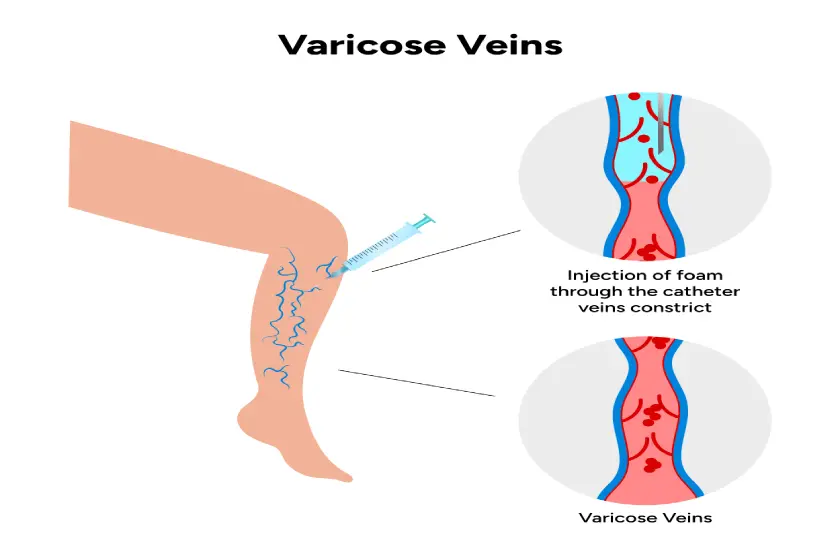
One of the most frequent questions I get in my clinic is: “Dr. Kapadia, have I waited too long to do something about these veins?” or conversely, “My veins aren’t that bad yet, should I even bother with a laser?”
The reality is that varicose veins are a progressive disease. They don’t just stay the same; they evolve. Whether you are seeing the first few blue lines on your ankles or you’ve been dealing with heavy, rope-like bulges for twenty years, the underlying problem is usually the same.
The good news is that modern laser technology is incredibly versatile, but how we use it depends entirely on which stage you’re in. And that is exactly what we are going to discuss in today’s blog.
Mild Varicose Veins: Early Stage Overview
In the beginning, you might not even see a bulge. Many of my patients in the early stages don’t come in because of how their legs look, but because of how they feel.
Early Stage Varicose Veins Symptoms
The early warning signs are often “hidden.” You might notice your legs feel like lead at the end of a long day, or you experience a restless sensation that makes it hard to sleep. If you find yourself constantly rubbing your calves or notice that your shoes feel tighter in the evening, those are classic early-stage varicose veins symptoms.
Early Stage Varicose Veins in Feet
I often tell patients to look at their feet and ankles first. This is where the pressure is highest. If you see tiny, dark purple clusters, often called ankle flares, or subtle blue veins starting to surface around the foot, these are the first signs that the deeper valves are beginning to struggle.
Treatment for Mild Varicose Veins
If we catch things early, we have options. Treatment for mild varicose veins isn’t always about jumping straight to a procedure. Often, I’ll start by recommending:
- Medical-grade compression: To help the valves do their job.
- Activity shifts: Focus on calf-muscle exercises like walking or cycling.
- Sclerotherapy: For small, cosmetic spider veins.
However, if an ultrasound shows that a main vein is leaking, we might suggest laser treatment early to shut the gate before the pressure damages the rest of your leg.
Advanced Varicose Veins: When the Condition Progresses
When left untreated, mild becomes advanced. This is where the veins become thick, rope-like, and painful. But the real concern with advanced varicose veins isn’t just the appearance, it’s the skin health.
Over time, the trapped blood causes inflammation that turns the skin near the ankles dark, itchy, and hard. If it reaches this point, you are at a much higher risk for spontaneous bleeding or ulcers that can take months to heal.
Is Laser Treatment Effective for Mild Varicose Veins?
Yes, and in many ways, this is the ideal time for it. Using laser (EVLA) on mild varicose veins is a very straightforward, walk-in, walk-out experience.
Because the vein hasn’t become excessively tortuous (twisted) yet, the laser fiber can pass through easily, sealing the leak with 98% success. It stops the disease in its tracks before skin damage ever starts.
Is Laser Treatment Effective for Advanced Varicose Veins?
Many patients think they need major surgery once the veins are large, but that’s a misconception. Laser is actually the advanced treatment for varicose veins that has replaced old-fashioned surgery.
Even if the veins are very large, we can use the laser to close the main feeder vein. Once that pressure is gone, the large bulges often shrink significantly.
If they don’t disappear entirely, we can remove them through tiny, 1mm micro-incisions that don’t even require stitches. Even in advanced stages, the recovery is still remarkably fast.
See this video on laser ablation of varicose veins:
Mild vs. Advanced Varicose Veins: Key Differences
| Feature | Mild Stage | Advanced Stage |
|---|---|---|
| Visuals | Small blue lines or spider veins. | Thick, rope-like, bulging veins. |
| Skin | Healthy and normal. | Darkening, thinning, or a leathery feel. |
| Daily Life | Legs feel tired by evening. | Constant pain, throbbing, or cramping. |
| Urgency | Can often be managed for a while. | Needs treatment to avoid ulcers or clots. |
When Should You Consider Laser Treatment?
You don’t have to wait for your legs to look bad to seek help. If the heaviness is stopping you from exercising, or if you’re worried about the changes you’re seeing in your skin, it’s time for an ultrasound.
My goal is always to treat the source of the problem, not just the symptoms you see on the surface.
Conclusion
Whether you are noticing early-stage varicose veins in the feet or you’ve been living with advanced varicose veins for years, the laser is an incredibly effective tool. It’s not about how bad the veins look; it’s about restoring the circulation in your legs so you can stay active and pain-free.
Frequently Asked Questions
The treated vein is permanently sealed and eventually absorbed by the body. While your body can always form new varicose veins in different vessels over time, the specific vein we treat with the laser will not come back.
Endovenous Laser Ablation (EVLA) is the gold standard. It’s a minimally invasive way to close diseased veins using heat, avoiding the need for the painful vein stripping of the past.
We usually start with a combination of lifestyle changes and compression. If those don’t help the symptoms, we use mild varicose veins treatment options like laser or sclerotherapy to close the problematic vessels.
Stage 1 usually involves spider veins or small reticular veins. They are more of a cosmetic warning sign that the venous system is under pressure, but they don’t usually show significant bulging yet.

Dr. Sumit Kapadia
MBBS, MS, MRCS, DNB-Fellow