If you feel a sharp, electric jolt in your thigh, your body is sounding an alarm. A heavy, bursting ache in your calves is another signal of distress.
Most people ignore these signs or apply a simple heating pad. This is a mistake because a heating pad cannot fix a vascular or nerve issue. Misdiagnosing these signals leads to months of useless treatment. It is like changing a lightbulb when the actual problem is a hidden electrical fire.
You must identify if the pain stems from muscles, nerves, or failing veins, as early detection is the only way to prevent a permanent loss of mobility.
Common Types of Leg Pain
To find relief, you must first locate the source of the pain. Leg pain generally falls into three categories. Musculoskeletal pain involves the muscles, bones, and ligaments. Neurological pain involves the delicate fibers of your nervous system.
Vascular pain stems from blood flow issues like varicose veins. Each type requires a unique diagnostic approach and a specific treatment plan.
What Is Muscle Pain in the Leg?
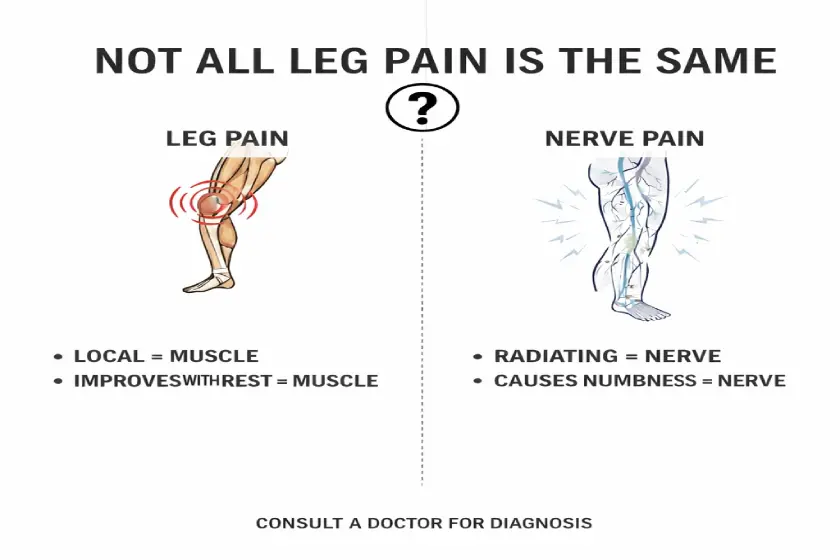
Muscle pain is the most common experience for active people. It is usually localized to one specific area of the leg. It feels like a deep, steady soreness in the tissue.
You can usually point to the exact spot that hurts. This pain is almost always tied to a recent physical activity.
Common Causes of Leg Muscle Pain
Every leg muscle pain usually traces back to physical strain. This includes muscle cramps, often called charley horses. Strains from overstretching are also very common. You might feel soreness a day or two after a heavy workout.
Sometimes, dehydration or low minerals can trigger these painful contractions. Electrolyte imbalances like low magnesium or potassium are common culprits in India.
Typical Muscle Pain Symptoms
You can identify this discomfort by looking for specific leg pain symptoms:
- A dull, aching sensation that feels heavy or tight.
- Pain that increases when you move or touch the muscle.
- Visible swelling or bruising in a concentrated area.
- Stiffness that improves with gentle stretching or rest.
What Is Nerve Pain in the Leg?
Nerve pain is an entirely different biological event. It happens when nerves are compressed, damaged, or irritated.
This pain does not stay in one single spot. It often travels or radiates along the entire nerve path. It can jump from the hip to the toes in a second.
Common Causes of Nerve Pain
The most frequent cause of nerve pain in the legs is sciatica. This happens when a spinal disc presses against the sciatic nerve.
Other causes include nerve damage from high blood sugar, known as diabetic neuropathy. Vitamin B12 deficiency is also a very common cause of nerve irritation. Sometimes, a nerve gets squeezed by tight tissues or inflammation.
Typical Nerve Pain Symptoms
Nerve pain has a very distinct personality compared to muscle pain:
- Sharp, electric, or stabbing sensations that come in waves.
- Tingling sensations are often described as pins and needles.
- Numbness or a total loss of feeling in the skin.
- A burning feeling that sits just under the skin surface.
Key Differences Between Nerve Pain and Muscle Pain
Knowing the difference between nerve pain and muscle pain helps you choose the right doctor. If the area is tender when pressed, it is likely muscle pain. If the pain feels like an electric shock while resting, it is likely nerve-related.
Muscle pain usually feels better with rest. Nerve pain often gets worse at night or when sitting in certain positions.
| Feature | Muscle Pain | Nerve Pain |
|---|---|---|
| Sensation | Dull, aching, or throbbing | Sharp, electric, or burning |
| Location | Stays in one muscle group | Travels or radiates down the leg |
| Triggers | Movement or physical exercise | Can happen even while sitting still |
| Touch | Area is tender to the touch | Area may feel numb or very sensitive |
Could Leg Pain Be Due to Vein Problems?
There is a third culprit often overlooked in this debate. Sometimes, a chronic ache is actually a vascular issue. This happens when the valves in your leg veins fail. Blood pools in the lower legs, creating a heavy, bursting sensation.
This is the hallmark symptom of varicose veins. The pain often comes with visible bulging veins or skin changes. It usually gets worse at the end of a long day of standing.
Leg Pain Symptoms You Should Not Ignore
Some symptoms act as urgent red flags for your health. Seek medical care immediately if you notice these signs:
- Sudden and severe swelling in just one leg.
- Difficulty lifting your foot while you are walking.
- Skin that feels hot or looks very dark or purple.
- Pain so intense that it prevents you from sleeping.
- A sore or ulcer on the leg that does not heal.
When Should You See a Specialist?
Do not self-diagnose if the pain lasts more than two weeks. If the pain is electric and travels, see a spine specialist. If you notice swelling or visible blue veins, you need a vascular evaluation.
A specialist can find the root cause much faster than a generalist. Waiting too long can lead to permanent nerve damage or blood clots.
Why Consulting a Varicose Veins Surgeon Matters
As a varicose veins surgeon, I see many misdiagnosed patients. Many people treat muscle fatigue when the problem is actually venous reflux. I use a duplex ultrasound to see your blood flow in real time. This test is non-invasive and highly accurate.
Treating the underlying circulation issue provides immediate relief. Muscle creams and nerve pills cannot fix a failing valve.
Conclusion
Distinguishing between nerve and muscle pain is the first step toward recovery. Understanding these differences allows you to advocate for your own health. If your leg pain includes heaviness or visible veins, do not wait.
Professional diagnosis is the only way to treat the problem correctly. Your mobility is too important to leave to chance. Modern treatments are quick and allow you to return to work the next day.
Frequently Asked Questions
Muscle pain is a dull ache during movement. Nerve pain is a sharp shock during rest.
It is likely nerve-related if you feel tingling, burning, or electric sensations.
Muscle pain stays in one spot. Nerve pain radiates down the entire leg.
Nerve pain often causes pins and needles and unexplained muscle weakness.
Regular pain is usually temporary and linked to activity. Nerve pain is often chronic and feels like fire or electricity.

Dr. Sumit Kapadia
MBBS, MS, MRCS, DNB-Fellow