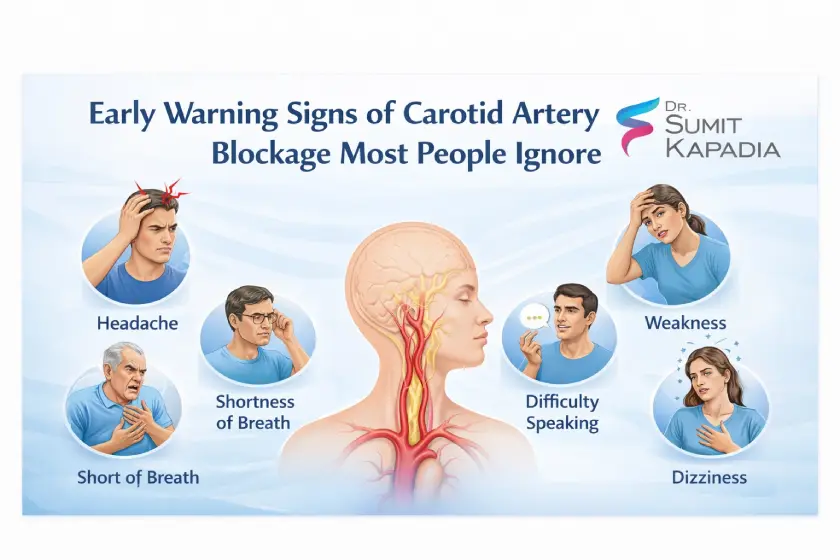
Many serious medical emergencies do not begin with dramatic symptoms. In fact, some of the most dangerous conditions develop quietly, sending out subtle warning signs that are easy to overlook or dismiss. Carotid artery blockage is one such condition.
The carotid arteries are major blood vessels in the neck that supply oxygen-rich blood to the brain. When these arteries start narrowing due to plaque buildup, blood flow to the brain becomes restricted. This significantly increases the risk of stroke, often without any obvious early warning.
Unfortunately, many people ignore or misunderstand the early signs of carotid artery blockage, assuming they are related to stress, fatigue, or ageing. Recognising these symptoms early can be life-saving.
What Is Carotid Artery Blockage?
Carotid artery blockage, also known as carotid artery stenosis, occurs when fatty deposits (plaque) build up inside the carotid arteries. Over time, this buildup narrows the artery, limiting blood flow to the brain.
If a piece of plaque breaks loose or a blood clot forms, it can completely block blood flow, leading to a stroke or transient ischemic attack (TIA).
Carotid artery disease often progresses silently, which is why early detection is critical.
Causes of Carotid Artery Blockage
Several factors contribute to carotid artery blockage, most of which develop gradually over the years.
Common causes include:
- Atherosclerosis (cholesterol plaque buildup)
- High blood pressure
- Diabetes
- Smoking
- High cholesterol levels
- Obesity and a sedentary lifestyle
- Increasing age
- Family history of vascular disease
These factors damage the inner lining of arteries, allowing plaque to accumulate and harden over time.
Early Warning Signs Most People Ignore
One of the most dangerous aspects of carotid artery disease is how subtle and temporary the early symptoms can be. Many patients experience symptoms that disappear within minutes or hours.
Common signs of carotid artery blockage include:
- Sudden weakness or numbness on one side of the body
- Temporary loss of vision in one eye
- Slurred or difficult speech
- Sudden dizziness or loss of balance
- Difficulty understanding simple words
- Unexplained confusion
- Brief episodes of severe headache
These are classic carotid artery blockage symptoms and are often warning signs of a TIA, sometimes referred to as a “mini-stroke.” Even if symptoms resolve on their own, they should never be ignored.
Why These Symptoms Are Often Missed
Many people fail to act because:
- Symptoms disappear quickly
- There is no pain involved
- They assume it’s stress, low BP, or fatigue
- They do not associate symptoms with artery disease
Unfortunately, a TIA is often the body’s final warning before a major stroke. Ignoring these early signs can result in permanent brain damage or life-threatening complications.
When to Seek Medical Attention Immediately
Seek urgent medical care if you or someone around you experiences:
- Sudden facial drooping
- Weakness in an arm or leg
- Speech difficulty
- Vision loss
- Sudden confusion or imbalance
Even if symptoms last only a few minutes, immediate evaluation is essential. Early intervention can prevent a full-blown stroke.
How Carotid Artery Blockage Is Diagnosed
Diagnosis begins with a clinical examination and assessment of symptoms, followed by imaging tests.
Common diagnostic methods include:
- Carotid Doppler ultrasound (first-line test)
- CT angiography (CTA)
- MR angiography (MRA)
- MRI of the brain
- Digital subtraction angiography (in select cases)
These tests help determine the severity of blockage and guide treatment decisions.
Carotid Artery Blockage Treatment Options
Carotid artery blockage treatment depends on the degree of narrowing and the presence of symptoms.
Non-surgical treatment:
- Blood thinners and antiplatelet medications
- Cholesterol-lowering drugs
- Blood pressure control
- Lifestyle changes (diet, exercise, smoking cessation)
Surgical and interventional options:
- Carotid endarterectomy (removal of plaque)
- Carotid artery stenting
Early treatment significantly reduces the risk of stroke and improves long-term outcomes.
When to Consult a Vein / Vascular Specialist
If you have risk factors like diabetes, hypertension, smoking history, or experience symptoms suggestive of reduced blood flow to the brain, consulting a vascular expert is essential.
A vein specialist doctor in Vadodara with expertise in vascular conditions can:
- Evaluate carotid artery health
- Recommend appropriate investigations
- Guide medical or surgical treatment
- Help prevent future strokes
Timely consultation with a vascular specialist can make a critical difference.
Conclusion
Carotid artery blockage often develops silently, but it rarely progresses without warning. The body usually gives subtle signals that many people overlook or dismiss.
Understanding the early warning signs of carotid artery blockage allows for early diagnosis, timely treatment, and stroke prevention. Paying attention to temporary symptoms today can prevent permanent disability tomorrow.
If you or a loved one has risk factors or unexplained neurological symptoms, seeking medical evaluation early is not just advisable; it can be life-saving.
Frequently Asked Questions
Sudden weakness, speech difficulty, vision loss, or numbness on one side of the body are often the earliest signs.
A carotid Doppler ultrasound is the most common and reliable initial test.
Dizziness, numbness, chest discomfort, leg pain while walking, and mini-stroke symptoms can all indicate clogged arteries.
A vascular or vein specialist evaluates and treats carotid artery disease.
Yes, MR angiography (MRA) can visualise carotid arteries and detect blockages.

Dr. Sumit Kapadia
MBBS, MS, MRCS, DNB-Fellow