Think about the last time you took a long car ride or sat through a three-hour movie. We’ve all had that heavy, stiff feeling in our legs. Usually, we just walk it off. But sometimes, that cramp in your calf is actually a silent warning.
In my daily work as a vascular surgeon in Vadodara at Aadicura Hospital, I see many patients who ignore a swollen leg until it is almost too late. This is Deep Vein Thrombosis (DVT), a blood clot that hides deep inside your leg.
In India, we often try home remedies like hot bags or massages for leg pain. But if it’s DVT, a massage is the worst thing you can do; it can push the clot straight to your lungs. Let’s talk about how to catch this early and stay safe.
What Causes Deep Vein Thrombosis?
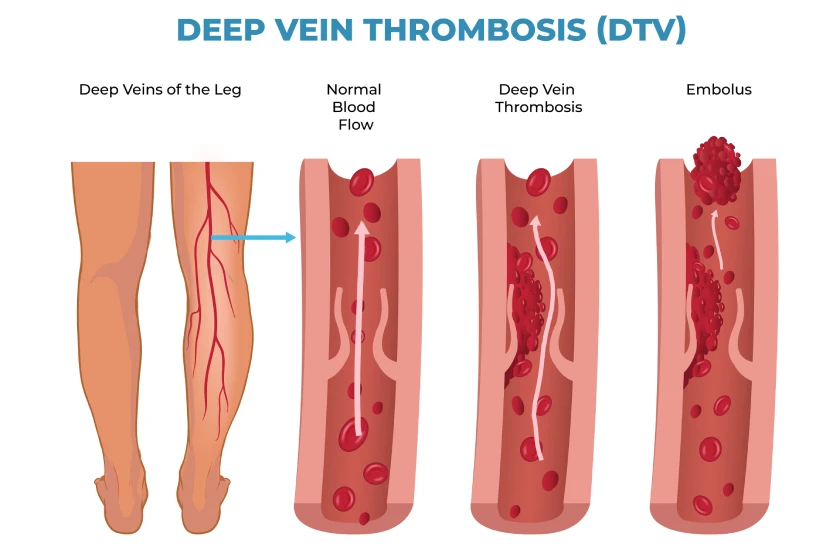
Essentially, DVT happens when your blood turns from a liquid into a solid clump inside a vein. It’s like a traffic jam in your leg’s plumbing.
The main DVT causes I see in my clinic are:
- Sitting Too Long: Whether it’s a desk job or recovering in bed after a fever, if your legs don’t move, the blood pools and clots.
- Major Surgery: Operations on the hip or knee often trigger the body’s clotting mechanism.
- Dehydration: In our hot Gujarat weather, not drinking enough water makes your blood thicker.
- Hidden Habits: Smoking and even certain hormonal pills can make your blood sticky.
Early Warning Signs You Should Not Ignore
DVT is a bit of a chupa rustom condition. It doesn’t always hurt a lot at first.
Early Stage DVT Symptoms in the Leg
When we look for early-stage DVT symptoms, leg issues usually show up on only one side. Look for:
- One-Sided Swelling: Your left leg looks puffier than the right.
- The Nerve Pain: A deep, nagging ache in the calf that feels like a nas chadh gayi (pulled nerve).
- Skin Warmth: If you touch your calf and it feels hot compared to the other leg.
- Color Change: The skin might look a bit reddish or even a dull blue.
Advanced or Serious Symptoms
If a piece of the clot breaks off and hits the lungs (Pulmonary Embolism), it is life-threatening. Seek help immediately if you have:
- Sudden gasping for air.
- Sharp chest pain when you breathe.
- Feeling very dizzy or fainting.
How Is Deep Vein Thrombosis Diagnosed?
Checking for a clot is actually quite simple and painless.
- Color Doppler Ultrasound: This is the best way. We use a probe to see the blood flow on a screen. It’s like a sonogram for your veins.
- D-dimer Test: A quick blood test that looks for clot pieces in your system.
- Physical Checkup: I check for specific tenderness points that are classic symptoms of a blood clot in the leg.
Deep Vein Thrombosis Treatment Options
The goal of deep vein thrombosis treatment is to keep the clot from moving or growing.
Non-Surgical Treatment
- Blood Thinners: These medicines stop new clots from forming. Your body then works to dissolve the old one naturally.
- Compression Stockings: These are tight socks that squeeze the leg to help blood flow upward.
Advanced / Surgical Interventions
If the clot is very large, we might need to vacuum it out:
- Thrombolysis: We send a tiny tube to the clot and melt it with medicine.
- IVC Filters: A small umbrella is put in the main vein to catch any stray clots before they reach the heart.
Exercise to Improve Blood Circulation and Reduce DVT Risk
You don’t need a gym. Try these exercises to improve blood circulation while sitting at home:
- Ankle Pumps: Flex your feet up and down 20 times every hour.
- Knee Lifts: March in your seat while watching TV.
- The Alphabet Move: Use your big toe to draw letters in the air.
A study in the Journal of Thrombosis and Haemostasis found that patients who started walking early, even just 10 minutes a few times a day, had much lower rates of long-term leg pain and swelling compared to those who just stayed in bed.
When Should You See a Vascular Surgeon?
If you have swelling in one leg that doesn’t go away with a night of rest, you need an expert. As a vascular surgeon in Vadodara, I always suggest getting an ultrasound if you are in doubt. It’s better to be safe than sorry.
Why Early Diagnosis of DVT Matters
If you wait, the clot can permanently damage the valves in your veins. This leads to Post-Thrombotic Syndrome, where your leg stays swollen, heavy, and dark forever. In bad cases, it can even cause painful skin sores (ulcers).
Expert Care for DVT in Vadodara
Dr. Sumit Kapadia practices at Aadicura Hospital, where we have world-class treatment right here in Vadodara. From the latest scans to keyhole procedures, we can manage DVT safely and effectively without big surgeries.
Conclusion
DVT sounds scary, but it’s very treatable if you catch it early.
Keep moving, drink plenty of water, and don’t ignore that one-sided leg pain. Your legs do a lot for you, so take care of them.
Frequently Asked Questions
Swelling in one leg, warmth, and a deep calf ache that feels like a cramp.
Usually in the deep veins of the calf or thigh.
The main risks are a lung clot (Pulmonary Embolism) and permanent leg swelling (Post-Thrombotic Syndrome).
Worry if the pain is in one leg only and if the leg looks swollen or feels heavy.
You must see a doctor. You will likely need blood thinners and special compression stockings to help the blood flow.

Dr. Sumit Kapadia
MBBS, MS, MRCS, DNB-Fellow