

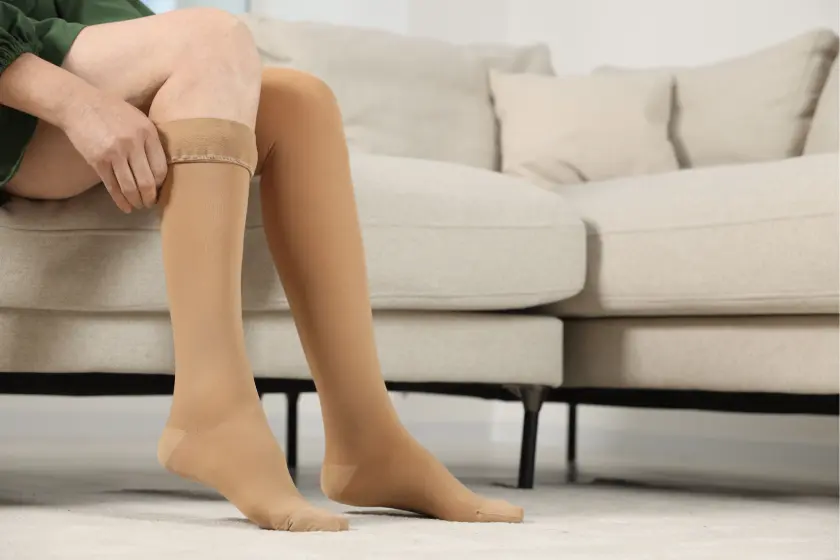
Many patients think the treatment ends once the varicose veins are injected or sealed. In reality, recovery after the procedure plays a major role in how successful the final results become.
One of the most important parts of that recovery is wearing compression stockings correctly.
After sclerotherapy treatment, the veins need time to heal and close properly. Without enough support, swelling, discomfort, and poor circulation can slow down recovery and sometimes even affect the results of the procedure.
Compression stockings help improve blood flow, reduce swelling, support healing, and lower the chances of complications after treatment.
In this blog, we will explain why compression matters after sclerotherapy treatment for varicose veins, how long stockings should be worn, and how to choose the right type for better recovery and long-term vein health.
What Is Sclerotherapy Treatment and How Does It Work?
Sclerotherapy treatment is one of the most widely used procedures for treating varicose veins and spider veins. It is a minimally invasive treatment in which a special solution is injected into the affected vein. This solution irritates the inner lining of the vein, causing the walls to collapse and seal shut.
Once the vein closes, blood automatically redirects through healthier veins nearby. Over time, the treated vein is naturally absorbed by the body and gradually fades away.
Sclerotherapy for varicose veins is commonly recommended for patients who experience visible enlarged veins, leg heaviness, aching, burning sensation, or swelling caused by poor venous circulation.
The procedure is usually completed within a short time, and most patients return home the same day. Modern vascular clinics may also combine sclerotherapy and laser treatment with injectable therapy in selected patients for better cosmetic and functional improvement.
Understanding Sclerotherapy Treatment for Varicose Veins and Recovery Process
Although recovery after sclerotherapy treatment varicose veins procedures is usually quick, the body still requires time to heal internally.
The treated veins do not disappear immediately after the procedure. The body slowly breaks them down over several weeks or months while circulation adjusts to healthier blood flow pathways.
During this recovery phase, compression becomes extremely important. Without adequate support, blood may pool inside the legs, increasing swelling and slowing healing.
This is why doctors strongly recommend compression stockings after treatment.
Why Compression Stockings Are Important After Sclerotherapy Treatment
Compression stockings are not simply an optional accessory after vein treatment. They are considered an important part of the recovery process.
After sclerotherapy treatment, the veins remain temporarily inflamed while healing. Compression helps keep the treated vein walls compressed together so they seal properly and recover more effectively.
Proper compression also improves circulation in the legs and reduces pressure inside damaged veins. This lowers discomfort and supports faster healing after the procedure.
Patients who consistently wear compression stockings after treatment often experience less swelling, less bruising, better cosmetic results, and a lower risk of the treated veins reopening.
Compression therapy is also commonly recommended after procedures such as endovenous laser treatment, radiofrequency ablation, and other vascular procedures, as it supports healthier circulation during recovery.
How Compression Stockings Help Reduce Swelling and Improve Healing
Swelling is common after vein procedures because the body naturally responds with temporary inflammation.
Compression stockings for swelling work by applying controlled pressure to the legs. The pressure is strongest near the ankle and gradually decreases as it moves upward. This helps push blood back toward the heart more efficiently. So, they are called as Graduated Compression stockings.
Improved circulation reduces fluid accumulation in the legs and lowers heaviness, tightness, and discomfort during recovery.
Compression stockings for edema are especially useful for patients with chronic swelling before treatment. By supporting venous return, they help reduce pressure inside the veins and improve overall circulation.
Compression also reduces the risk of blood pooling in treated veins, which helps improve healing and reduces the risk of complications after sclerotherapy.
Types of Compression Stockings and How to Choose the Right One
There are several types of compression stockings available, and choosing the right one depends on the severity of vein disease, the location of the treated veins, and patient comfort.
Some stockings cover only the lower leg, while others extend above the knee or up to the waist. Compression strength also differs depending on medical needs.
Mild compression stockings are often used for minor swelling and fatigue, while stronger medical-grade compression is recommended after procedures such as sclerotherapy treatment for varicose veins.
The correct fit is extremely important. Stockings that are too loose may not provide enough support, while stockings that are too tight can become uncomfortable and difficult to wear consistently.
Doctors usually recommend specific compression levels based on the patient’s circulation and recovery needs.
Compression Stockings for Swelling and Edema: Key Benefits
Compression stockings for swelling are designed to improve blood circulation and reduce fluid buildup inside the legs.
They are especially beneficial for patients who spend long hours standing, traveling, or sitting. Patients with chronic venous insufficiency and edema often experience reduced heaviness and leg fatigue when using proper compression therapy.
Consistent use also helps support healthier circulation after vein procedures and lowers pressure inside damaged veins.
Compression Stockings for Women: Comfort, Fit, and Style
Modern compression stockings for women are now available in more comfortable and stylish designs compared to older medical stockings.
Many brands offer lightweight materials, skin tone shades, athletic designs, and maternity options that make daily use easier and more practical.
However, appearance should never become more important than proper fitting. Well-fitted compression stockings provide more effective support and better recovery after sclerotherapy treatment.
Compression Stockings for Men: Features and Usage Guide
Compression stockings for men are commonly recommended after vein procedures, especially in men who spend long hours standing or traveling.
Many newer designs now resemble regular socks while still providing medical-grade compression support. Breathable fabrics and moisture control materials also improve comfort during prolonged use.
Men with varicose veins often experience reduced swelling, improved circulation, and less leg fatigue when compression stockings are worn correctly after treatment.
Sclerotherapy Laser Treatment vs Traditional Sclerotherapy: Does Aftercare Differ?
Traditional sclerotherapy and sclerotherapy laser treatment use different techniques to close damaged veins, but both procedures require proper aftercare for optimal results.
Traditional sclerotherapy uses injectable solutions to irritate and seal veins, while laser treatment uses heat energy to close abnormal veins internally.
Despite these differences, compression therapy remains equally important after both procedures. Patients are usually advised to walk regularly, avoid prolonged inactivity, avoid excessive heat exposure, and wear compression stockings consistently during recovery.
Compression helps maintain vein closure, improves circulation, and supports proper healing regardless of the treatment method used.
How Long Should You Wear Compression Stockings After Sclerotherapy?
The duration depends on the severity of vein disease, the number of veins treated, and the patient’s overall circulation.
Most vascular specialists advise patients to wear compression stockings continuously for the first one to two days after treatment. After that, stockings are usually worn during daytime for one to two weeks or longer if recommended.
Patients with severe venous insufficiency or persistent swelling may need longer use.
Consistency is extremely important during recovery because irregular use may reduce the effectiveness of compression therapy.
Risks of Not Wearing Compression Stockings After Sclerotherapy Treatment
Many patients stop wearing compression stockings too early because they feel better within a few days after treatment.
However, inadequate compression can increase the risk of swelling, discomfort, delayed healing, blood pooling, and reopening of treated veins.
Some patients may also develop skin discoloration or trapped blood inside treated veins when compression is not used properly.
Wearing compression stockings consistently after sclerotherapy significantly improves healing and reduces the risk of additional procedures.
When to Consult a Doctor During Recovery
Mild bruising and temporary swelling are common after sclerotherapy treatment and usually improve gradually. However, patients should contact their doctor if they develop severe swelling, increasing pain, sudden redness, difficulty walking, fever, shortness of breath, or worsening skin discoloration.
Early medical evaluation helps identify complications quickly and ensures a safer recovery after treatment.
Conclusion
Sclerotherapy treatment is highly effective for improving both the appearance and symptoms of varicose veins, but proper aftercare plays a major role in achieving the best long-term results.
Compression stockings and varicose veins management are closely connected because compression supports circulation, reduces swelling, improves healing, and lowers the risk of complications after treatment.
Whether a patient undergoes traditional sclerotherapy or laser with sclerotherapy treatment, wearing properly fitted compression stockings consistently can make recovery smoother and improve overall treatment success.
Small decisions about aftercare following vein treatment often have a major impact on long-term vascular health and patient comfort.
Frequently Asked Questions
Sclerotherapy treatment is a minimally invasive procedure in which a special solution is injected into damaged veins to make them collapse and gradually disappear.
Compression stockings help reduce swelling, improve blood circulation, support healing, lower discomfort, and reduce the risk of complications after treatment.
Knee-high stockings support the lower legs, while thigh-high stockings provide compression to both the calves and thighs. The choice depends on the location of the affected veins. Usually, below-knee or knee-high stockings are more comfortable and can be worn more consistently.
Graduated medical-grade compression stockings with moderate compression are commonly recommended for varicose veins, depending on the patient’s condition.
Common types include knee-high, thigh-high, pantyhose, compression, open-toe, and closed-toe stockings, as well as medical-grade compression wear for various vascular conditions.

Dr. Sumit Kapadia
MBBS, MS, MRCS, DNB-Fellow