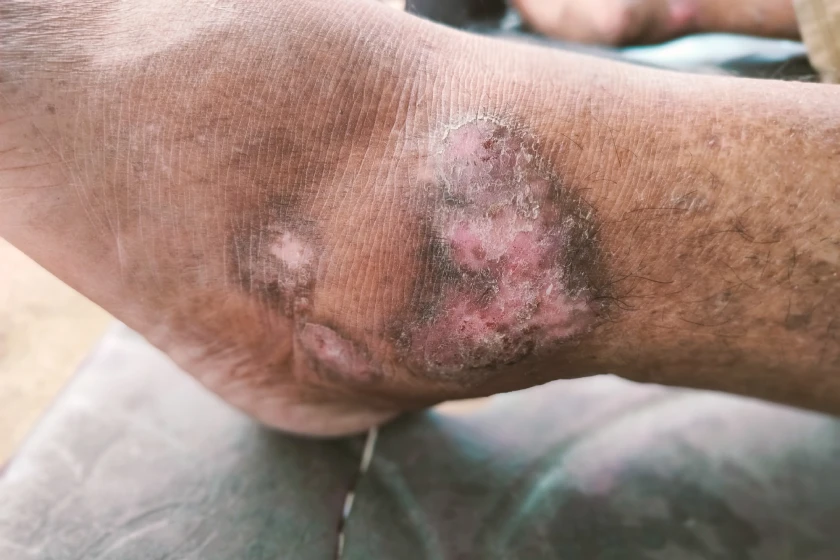
A leg ulcer is more than just a surface wound; it is an alarm signal from your body indicating a serious problem with your circulatory system.
These open sores on the lower leg or foot fail to heal, typically lingering for more than six weeks. They are complex wounds, and their origins are usually deeply rooted in faulty circulation. The most common form is the venous leg ulcer, which arises from high pressure in the veins, but we also deal with arterial ulcers and diabetic leg ulcers.
My purpose here is simple: to debunk six of the most persistent myths I hear every day in my clinic. Dispelling these misconceptions is crucial for anyone dealing with a chronic leg ulcer because relying on bad information is the fastest way to prolong the healing process.
Let’s separate fact from fiction and focus on the science of healing.
Myth 1: Leg ulcers heal on their own
The Dangerous Misconception: Many patients believe that if they simply keep the wound clean and wait long enough, the body’s natural healing abilities will take over. They delay seeing a specialist for weeks or even months.
The Clinical Reality: Leg ulcers do not typically heal on their own because they stem from a deep, underlying mechanical failure—usually poor circulation. A venous leg ulcer, for instance, is the result of long-standing venous hypertension, meaning the pressure inside the veins is too high for the delicate skin and tissue to repair itself. Similarly, arterial ulcers lack the necessary oxygenated blood flow. Without addressing that fundamental circulatory problem, the wound remains an open, vulnerable area. Seeking a qualified leg ulcer doctor to identify the root cause—be it arterial, venous, or neuropathic—and initiating targeted leg ulcer treatment (like compression or revascularization) is mandatory. The longer you wait, the larger the wound becomes, and the higher the risk of severe infection.
Myth 2: Only older people get leg ulcers
The Dangerous Misconception: This myth is based on the idea that vascular problems are strictly a result of advanced age. People in their 30s or 40s dismiss their leg ulcer symptoms because they believe they are too young for such a diagnosis.
The Clinical Reality: While the risk of vascular disease certainly increases with age (the peripheral artery disease age factor), ulcers can affect anyone with significant underlying risk factors. Patients with uncontrolled diabetes, regardless of their age, are at risk for diabetic leg ulcers due to nerve damage and restricted blood flow. Furthermore, individuals with a genetic predisposition to weak vein valves, obesity, or a history of deep vein thrombosis (DVT) can develop severe venous leg ulcers regardless of age. It’s the disease process, not the calendar, that determines vulnerability. If you have non-healing wounds, your age should not be a reason to ignore the problem.
Myth 3: Resting your leg always helps
The Dangerous Misconception: Intuitively, it feels like an injured leg should be rested and elevated constantly. Patients believe complete immobilization is the fastest path to healing.
The Clinical Reality: Prolonged rest is often entirely counterproductive, particularly for the most common ailment, a venous leg ulcer. The key to healing any venous wound is improving blood return to the heart and reducing chronic pressure in the legs. For these ulcers, that means movement and compression. Walking activates the calf muscle pump, which is essentially the “second heart” of the leg, mechanically squeezing pooled blood out of the veins. Constant immobility allows fluid to pool, increasing pressure (edema), which starves the wound bed of nutrients and hinders repair. While elevation is helpful, movement is essential. Simple, gentle exercise for leg ulcers, such as regular walking, is part of the treatment protocol.
Myth 4: Leg ulcers are always caused by injury
The Dangerous Misconception: People often focus their blame entirely on the accident—a bump, a scratch, or a bug bite—rather than looking inward at their health. They think that if they had just avoided injury, they wouldn’t have had the ulcer.
The Clinical Reality: An injury or a small cut rarely causes a chronic leg ulcer in a person with healthy circulation. The small trauma simply acts as the trigger that breaks the skin in an area already critically compromised by poor circulation—one of the key leg ulcer causes. If the underlying circulatory health were normal, the cut would heal in a week. The persistent failure to heal is evidence of the systemic problem. Whether it’s severe vein dysfunction (venous) or hardened arteries (arterial), the injury is the spark, but circulatory disease is the fuel. Focusing only on preventing minor trauma distracts from treating the major vascular disease.
Myth 5: Cleaning with harsh antiseptics is good
The Dangerous Misconception: Many people still believe that “if it stings, it’s working.” They use harsh, old-fashioned antiseptics to vigorously clean the wound, believing they are killing all the bacteria.
The Clinical Reality: This is outdated science. Harsh antiseptics (such as concentrated iodine, hydrogen peroxide, or certain strong chemicals) are cytotoxic—meaning they actively damage the delicate, healthy cells (fibroblasts and epithelial cells) required for wound repair. This practice causes chemical trauma and can significantly slow down the healing process. Modern leg ulcer treatment protocols strictly favor gentle techniques: cleaning the wound with sterile saline solution and using specialized dressings that maintain a moist, balanced environment, which is proven to promote faster healing and prevent infection without destroying new tissue.
Myth 6: Home remedies alone can cure ulcers
The Dangerous Misconception: The internet is flooded with anecdotes about natural oils, herbal pastes, or proprietary supplements that claim to “cure” ulcers without medical input. Patients try these, delaying specialized care.
The Clinical Reality: While good nutrition, elevation, and hydration are crucial supporting players in recovery, home remedies cannot cure a leg ulcer because they fail to fix the fundamental circulatory problem. Whether you are dealing with types of leg ulcers like arterial, venous, or diabetic, the problem is mechanical or physiological. You need specialized medical intervention, which often includes compression therapy, advanced bioengineered dressings, or even revascularization procedures (to fix the arteries or veins). A leg ulcer doctor provides a targeted, evidence-based treatment plan. Relying on unproven remedies allows the underlying disease to worsen and may lead to irreversible complications.
Conclusion
Misinformation about leg ulcer symptoms and care can be genuinely dangerous, leading to delayed leg ulcer treatment, protracted suffering, and unnecessary complications. If you suspect you have a chronic leg ulcer—or any wound that has lingered for more than four weeks—do not rely on myths or unproven home remedies.
Seek professional help promptly to get an accurate diagnosis of the leg ulcer causes and start a targeted treatment plan focused on restoring healthy circulation. Your successful recovery depends on acting quickly and following evidence-based medical guidance.
Frequently Asked Questions
No, most chronic leg ulcers will not heal without specialized treatment because they are caused by underlying circulatory problems, such as arterial or venous disease. Without treating the root cause (like high vein pressure), the skin cannot repair itself effectively.
No, prolonged, continuous rest is actually detrimental for venous leg ulcers. Movement, especially walking, is crucial because it activates the muscle pump to reduce high vein pressure and improve blood flow, which speeds up healing.
A small injury rarely causes an ulcer; it usually just triggers it. The persistent failure to heal is evidence that the area already suffers from significant underlying disease or poor circulation, which prevents the wound from closing normally.
No. While good general health practices support healing, natural oils and home remedies do not address the fundamental issue of poor blood flow or high vein pressure, which is necessary to cure a chronic leg ulcer. You need specialized medical care.

Dr. Sumit Kapadia
MBBS, MS, MRCS, DNB-Fellow