

In clinical practice, one of the most concerning patterns I see is patients ignoring symptoms simply because they disappear. A brief episode of slurred speech or temporary weakness is often dismissed as fatigue or stress, but in reality, these can be early warnings of a serious vascular problem.
Many of these cases are linked to carotid artery disease, a condition that quietly progresses until it disrupts blood flow to the brain.
Understanding the difference between a stroke and a mini stroke is essential, not only for early diagnosis but also for preventing long-term complications.
A mini stroke is often the body’s way of signaling that a major event may follow, and recognizing this distinction can significantly improve outcomes.
What Is Carotid Artery Disease?
Carotid artery disease refers to the narrowing of the carotid arteries due to the buildup of fatty deposits known as plaque. These arteries are responsible for supplying oxygen rich blood to the brain, and any reduction in their diameter can compromise this critical circulation.
Over time, this narrowing can become severe enough to either limit blood flow or allow small fragments of plaque to travel upward into the brain.
According to global data, carotid artery disease contributes to nearly 10 to 20% of ischemic strokes, making it a significant but often underdiagnosed condition. The disease tends to develop gradually, which is why many individuals remain asymptomatic until a neurological event occurs.
How Carotid Artery Blockage Leads to Stroke and Mini Stroke?
When plaque accumulates within the carotid arteries, it creates turbulence in blood flow and increases the likelihood of clot formation. These clots or plaque fragments can travel to smaller arteries in the brain, temporarily or permanently blocking circulation. The duration of this blockage determines whether the event is classified as a mini stroke or a full stroke.
A temporary obstruction that resolves quickly results in a mini stroke, where symptoms appear and disappear without lasting damage.
However, if the blockage persists and brain tissue is deprived of oxygen for a longer duration, it leads to a stroke, causing irreversible injury. This is why carotid artery blockage is directly associated with both conditions, differing only in severity and duration.
What Are the Different Types of Strokes
Strokes are broadly classified based on their underlying cause, and understanding these categories helps in both diagnosis and management.
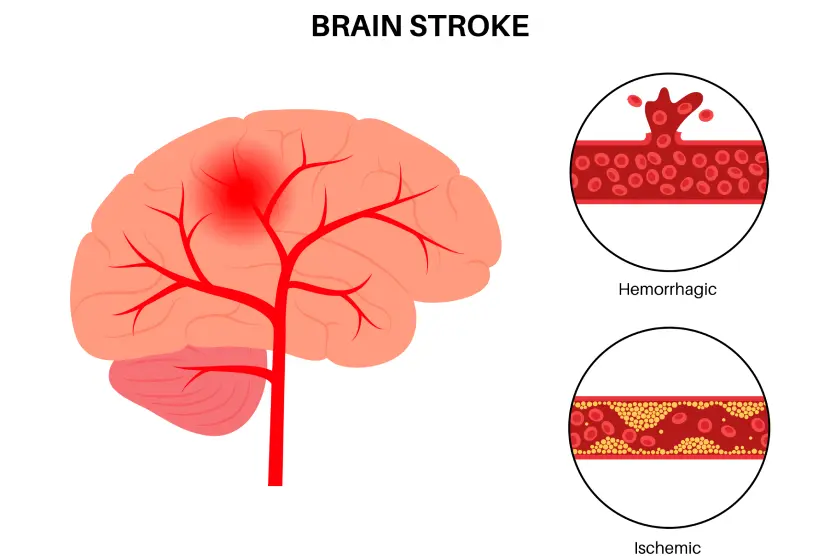
The most common type is the ischemic stroke, which accounts for nearly 85% of all stroke cases and is usually caused by a blockage in an artery supplying the brain. This type is most closely associated with carotid artery disease.
The second type is hemorrhagic stroke, which occurs when a blood vessel in the brain ruptures and leads to bleeding within or around brain tissue. Although less common, it is often more severe and requires immediate intervention.
The third category is the transient ischemic attack, commonly referred to as a mini stroke, which serves as a warning sign rather than causing permanent damage.
What Is a Mini Stroke?
A mini stroke, medically known as a transient ischemic attack, occurs when there is a temporary reduction in blood flow to the brain. The symptoms closely resemble those of a stroke but resolve completely within a short period, typically within minutes to a few hours. Despite the absence of lasting damage, the event should never be ignored.
Studies suggest that nearly one in three individuals who experience a mini stroke may go on to have a full stroke, often within the first few weeks if appropriate treatment is not initiated. This makes early detection and intervention critical in managing carotid artery disease effectively.
Difference Between a Stroke and a Mini Stroke
The difference between a stroke and a mini stroke lies primarily in the duration of blood flow interruption and the extent of brain injury. In a stroke, the blockage persists long enough to cause permanent damage to brain cells, leading to lasting neurological deficits.
In contrast, a mini stroke involves a brief interruption that resolves before significant injury occurs.
While the symptoms may appear similar in both cases, the consequences are vastly different. A stroke often results in long-term disability, whereas a mini stroke serves as an early warning sign that allows for preventive measures to be taken.
Clinically, a mini stroke should always be treated with the same urgency as a stroke because of its predictive value.
Signs of a Mini Stroke You Shouldn’t Ignore
The signs of a mini stroke typically appear suddenly and may resolve just as quickly, which is why they are often overlooked.
Common symptoms include weakness or numbness on one side of the body, difficulty speaking or understanding speech, and sudden vision disturbances. Some patients also report dizziness, loss of balance, or a brief episode of confusion.
Even if these symptoms last only a few minutes, they indicate a temporary disruption in blood flow to the brain. Ignoring these signs can delay diagnosis and increase the risk of a major stroke, making immediate medical evaluation essential.
Pre Stroke Symptoms and Warning Signs
Pre stroke symptoms can occur hours, days, or even weeks before a major stroke, and they often present as intermittent neurological disturbances.
These may include brief episodes of weakness, temporary vision loss in one eye, or short periods of slurred speech. In some cases, patients experience unexplained headaches or sudden difficulty maintaining balance.
Effects of a Stroke vs Side Effects of a Mini Stroke
The effects of a stroke can be profound and long-lasting, depending on the area of the brain affected and the duration of oxygen deprivation. Patients may experience paralysis, difficulty speaking, memory impairment, or loss of coordination, often requiring prolonged rehabilitation. In severe cases, stroke can lead to permanent disability or even death.
In comparison, the side effects of a mini stroke are temporary and resolve completely without lasting neurological damage. However, the absence of visible deficits does not mean the condition is harmless, as it significantly increases the likelihood of a future stroke if left untreated.
Stroke in the Elderly: Risks and Challenges
Stroke in elderly individuals presents additional complexities due to age-related changes in blood vessels and the presence of other medical conditions such as hypertension, diabetes, and heart disease.
These factors contribute to a higher incidence of carotid artery disease and increase the likelihood of both strokes and mini strokes in elderly populations.
Recovery can also be more challenging in older patients, as the brain’s ability to adapt and heal decreases with age.
Statistics show that nearly 75% of strokes occur in individuals over the age of 65, highlighting the importance of early screening and preventive care in this group.
Tips to Improve Carotid Artery Health and Prevent Stroke
Maintaining good carotid artery health requires a combination of lifestyle modifications and medical management. Controlling blood pressure, managing diabetes, and reducing cholesterol levels are essential steps in preventing plaque buildup.
Regular physical activity improves circulation, while a balanced diet rich in fruits, vegetables, and healthy fats supports vascular health.
Avoiding smoking and limiting alcohol intake further reduces the risk of carotid artery blockage. Routine medical checkups and imaging studies, when recommended, can help detect early changes and allow for timely intervention before complications arise.
Conclusion
The difference between a stroke and a mini stroke goes far beyond how long the symptoms last. A mini stroke is often the first clear indication that blood flow to the brain is being compromised, most commonly due to underlying carotid artery disease.
What makes it clinically significant is not the temporary nature of symptoms, but the high risk of a major stroke that can follow if the root cause is not addressed.
In my experience, patients who act on these early warning signs have far better outcomes than those who wait for symptoms to return.
Frequently Asked Questions
The main types of strokes include ischemic stroke, hemorrhagic stroke, and transient ischemic attack. Symptoms typically involve sudden weakness, speech difficulty, vision problems, and loss of coordination.
The difference between a stroke and a mini stroke lies in the duration and damage caused. A stroke leads to permanent brain injury, while a mini stroke is temporary but signals increased future risk.
Signs of a mini stroke include sudden numbness, difficulty speaking, facial drooping, vision disturbances, and dizziness that resolves within a short time.
Yes, a mini stroke is often a warning sign and significantly increases the risk of a major stroke, especially within the first few weeks if untreated.
Pre stroke symptoms include temporary weakness, brief vision loss, slurred speech, dizziness, and unexplained headaches that occur intermittently.
A mini stroke usually lasts from a few minutes to a few hours, and symptoms resolve completely within 24 hours.

Dr. Sumit Kapadia
MBBS, MS, MRCS, DNB-Fellow