

When people hear about carotid artery disease, their first concern is usually stroke. While stroke is one of the most serious complications, it is not the only reason doctors pay close attention to the carotid arteries.
The brain depends on a constant supply of oxygen-rich blood to function properly. When that supply becomes reduced because of a carotid artery blockage, the effects may extend beyond physical symptoms. In some individuals, changes may gradually affect memory health, concentration, and overall brain function.
Not every person with carotid artery disease will experience memory-related symptoms. However, understanding the connection between blood flow, brain health, and cognitive function can help people recognize potential warning signs earlier.
What Are the Carotid Arteries and How Do They Support the Brain Arteries?
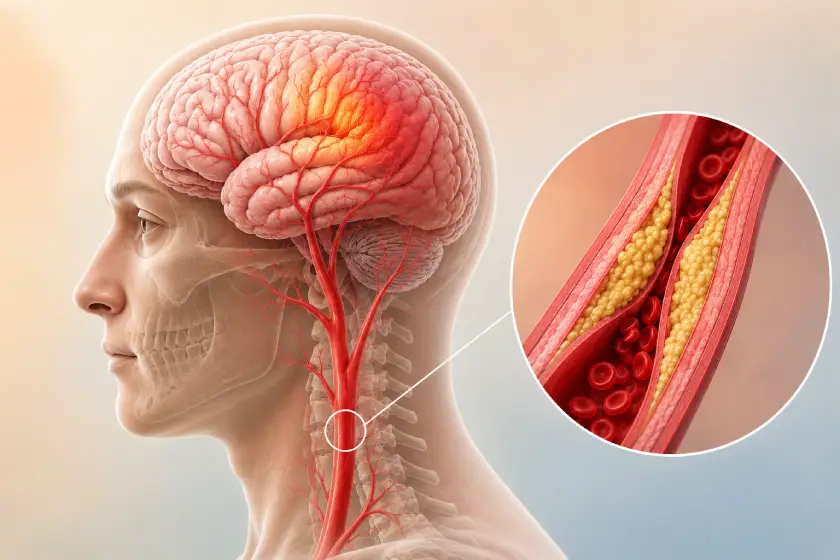
The carotid arteries are two major blood vessels located on either side of the neck. Their job is to carry oxygen-rich blood from the heart to the brain.
These arteries play a critical role in supplying blood to the brain, arteries that support thinking, memory, movement, and other neurological functions. Every thought, memory, and decision depends on healthy circulation reaching the brain.
Because the brain cannot store large amounts of oxygen, it relies on a continuous blood supply. Even small disruptions in circulation can affect how the brain functions.
This is why the health of the carotid arteries is closely linked to both brain health and memory health.
How Carotid Artery Blockage Restricts Blood Flow to the Brain
Carotid artery blockage usually develops gradually over time.
Fatty deposits known as plaque accumulate inside the artery walls, causing the passageway for blood flow to become narrower. As the blockage progresses, less blood may reach certain parts of the brain.
In some people, the reduction is not significant enough to cause symptoms immediately. In others, reduced circulation may affect brain function or increase the risk of stroke.
The greater the degree of carotid artery blockage, the greater the concern about long-term effects on brain health.
Signs That Carotid Artery Disease May Be Affecting Your Memory Health
Changes in memory do not always mean a person has dementia or a memory disease. Sometimes, reduced blood flow to the brain may contribute to subtle cognitive changes that develop gradually.
Because these changes can occur slowly, they are often dismissed as normal aging.
Forgetfulness and Cognitive Changes
One of the earliest concerns patients mention is forgetfulness.
People may find themselves misplacing items more often, forgetting appointments, or struggling to recall information that would normally come easily. While occasional forgetfulness is common, persistent changes deserve attention.
When carotid artery disease affects blood flow to certain areas of the brain, cognitive efficiency may be affected.
Brain Memory Problems and Concentration Difficulties
Many patients describe brain memory problems not as complete memory loss, but as difficulty staying focused.
Tasks may take longer to complete. Conversations may be harder to follow, and concentration may seem reduced compared to previous years.
These symptoms do not confirm carotid artery disease, but they highlight the close relationship between circulation and brain and memory function.
Symptoms of Brain Memory Loss
Brain memory loss can present in different ways.
Some people struggle to remember recent conversations. Others find it difficult to learn new information or recall names and familiar details.
While severe brain memory loss is often associated with conditions such as memory disease, vascular causes should also be considered, especially when circulation problems are present.
This is one reason doctors sometimes evaluate vascular health when investigating brain memory problems.
Other Brain Problems and Memory Disorders Linked to Carotid Artery Disease
Carotid artery disease has been linked to a variety of brain problems beyond memory concerns.
Reduced blood flow may contribute to difficulties with attention, processing speed, decision-making, and overall cognitive performance. Small, repeated disruptions in circulation can affect brain function even without causing a major stroke.
In some cases, vascular changes may contribute to forms of cognitive decline that resemble other memory disorders.
This does not mean carotid artery disease directly causes every memory disease, but it highlights the importance of maintaining healthy circulation to the brain.
Understanding the Relationship Between Brain and Memory Health
The connection between the brain and memory function is closely tied to circulation.
The brain requires a steady supply of oxygen and nutrients to create, store, and retrieve memories. When blood flow becomes compromised, certain areas may not function as efficiently.
This is why doctors increasingly view memory health and vascular health as interconnected rather than separate concerns.
Protecting the blood vessels that supply the brain can play an important role in preserving long-term brain health.
Warning Signs That Require Immediate Medical Attention
Some symptoms suggest a possible stroke or severe circulation problem and should never be ignored.
Sudden weakness on one side of the body, facial drooping, difficulty speaking, sudden vision changes, loss of balance, or confusion requires urgent medical evaluation.
A transient ischemic attack, often called a mini-stroke, may cause similar symptoms that resolve within minutes or hours. Even if symptoms disappear, immediate medical attention is still necessary.
These warning signs may indicate significant carotid artery blockage and an increased risk of stroke.
Treatment Options for Carotid Artery Disease and Stroke Prevention
Treatment depends on the severity of carotid artery disease and the patient’s overall risk profile.
Lifestyle modifications, medications to control cholesterol and blood pressure, and blood-thinning medications may be recommended in some cases.
For more significant carotid artery blockage, procedures such as carotid endarterectomy or carotid artery stenting may be considered. These treatments aim to restore blood flow and reduce stroke risk.
The goal is not only stroke prevention but also protection of long-term brain health.
Preventive Strategies for Better Brain Health and Memory Function
Protecting brain health often starts with protecting blood vessels.
Controlling blood pressure, cholesterol, diabetes, and maintaining a healthy weight can help reduce vascular risk. Regular physical activity also supports circulation to the brain and may benefit memory health.
Avoiding smoking is particularly important because tobacco use damages blood vessels and accelerates plaque formation.
Routine medical checkups become increasingly valuable with age, especially for individuals who have risk factors for carotid artery disease.
Conclusion
Carotid artery disease is often viewed through the lens of stroke prevention, but its impact may extend beyond that.
Because the carotid arteries play such an important role in supplying blood to the brain arteries, significant carotid artery blockage may affect brain health, memory health, and overall cognitive function. Changes such as forgetfulness, concentration difficulties, and brain memory problems should not always be dismissed as normal aging.
The encouraging news is that early detection and proper treatment can help reduce complications. Protecting vascular health remains one of the most important steps in preserving both brain and memory function over the long term.
Frequently Asked Questions
Potential risks include bleeding, infection, nerve injury, heart complications, and stroke, although the procedure is generally considered safe when performed in appropriate patients.
Early signs may include transient weakness, difficulty speaking, vision changes, dizziness, or mini-stroke symptoms. Some patients may have no symptoms initially.
Carotid artery blockage may reduce blood flow to areas of the brain involved in memory and cognitive function, potentially contributing to memory-related symptoms.
Sudden weakness, facial drooping, speech difficulty, confusion, vision loss, and balance problems are important warning signs.
Common early signs include increased forgetfulness, difficulty recalling recent information, trouble concentrating, and challenges completing familiar tasks.

Dr. Sumit Kapadia
MBBS, MS, MRCS, DNB-Fellow