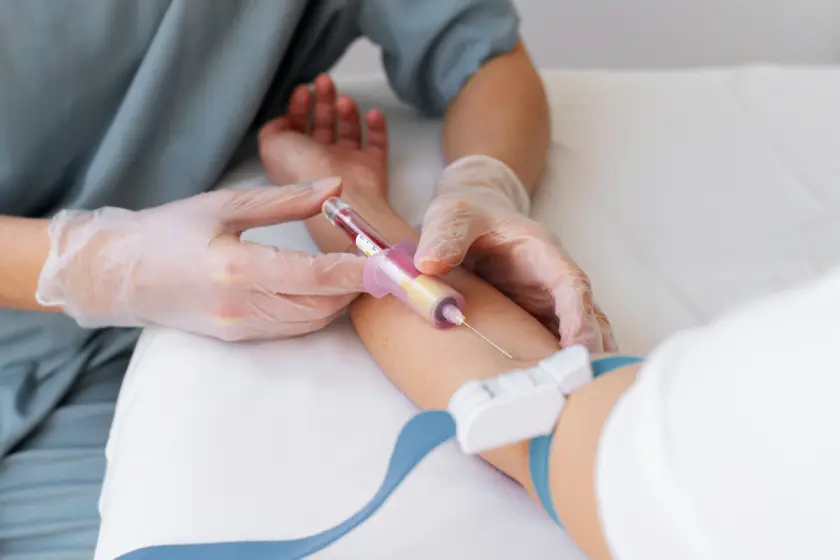
When Mr. Rajesh Vyas, a mathematics teacher from Vadodara, first learned his kidneys were failing, his primary concern was the long-term reality of treatment. He soon discovered that life-saving dialysis requires a high volume of blood flow that normal, thin-walled veins simply cannot handle.
To solve this, I performed a specialized procedure to join an artery directly to a vein in his arm. Within weeks, that vein responded by growing thick and strong, vibrating with a steady hum that proved his lifeline was ready for use. This result is what we call an Arteriovenous (AV) Fistula. It is a vital connection that bridges the gap between kidney failure and a stable, manageable life.
While an AV Fistula is defined as any abnormal connection between an artery and a vein, most are created intentionally by a vascular surgeon to provide a critical, long-term access point for patients on dialysis.
What Causes an Arteriovenous Fistula?
Several distinct factors can lead to the formation of these vascular connections. Some individuals are born with these pathways due to congenital defects, though this is relatively rare in clinical practice. More commonly, physical injuries serve as a major cause of acquired fistulas.
For instance, a deep wound or blunt trauma can damage a neighboring artery and vein simultaneously, causing them to heal together into a single channel. In some cases, medical procedures like catheter insertions can accidentally create a fistula if both vessels are punctured.
However, the most frequent cause remains a purposeful operation where a vascular surgeon performs AV fistula surgery to help kidney patients access their treatments safely and reliably.
Types of AV Fistula
Understanding the specific types of AV fistula is essential for determining the right medical management strategy. These connections are generally classified based on how they formed and their specific location within the body.
Congenital AV Fistula
These are present at birth and occur due to developmental errors in the womb. Because they form as the blood vessels grow, small congenital fistulas may show no symptoms for years. However, larger ones can eventually put a heavy strain on the heart by forcing it to pump much harder to maintain circulation.
Acquired AV Fistula
These develop later in life and are almost always the result of external trauma. An old injury to a limb can result in a fistula that only becomes symptomatic years after the initial accident. Detecting these requires specialized imaging to pinpoint the exact location of the abnormal leak.
Surgically Created AV Fistula
This is the most common type I encounter in my practice, as they serve as the primary types of AV fistula for dialysis. In this procedure, I connect an artery to a vein, typically in the forearm or upper arm. Over the following weeks, the vein undergoes a maturation process, thickening its walls to handle the frequent pressure of dialysis needles.
How is an AV Fistula Diagnosed?
A vascular surgeon can often identify a fistula during a routine physical exam by looking for two specific signs. First, I listen for a bruit, which is a distinct humming sound made by blood rushing through the connection.
Second, I feel a thrill, which is a physical vibration felt directly over the skin. These signs are positive indicators that blood is moving through the connection at the necessary high pressure.
To confirm these findings, a Duplex Ultrasound is used to measure the exact speed and volume of flow. In more complex scenarios, a CT Angiogram provides a detailed map of the vessels to guide the surgical team.
Arteriovenous Fistula Treatments
The choice of arteriovenous fistula treatments depends entirely on the purpose and health of the connection. Not every fistula requires immediate closure or intervention, especially those created for medical use.
Conservative Management
Small fistulas that do not impact heart function are often just monitored closely. I check these patients regularly to ensure there are no dangerous changes in the size of the vessels or the volume of blood flow. If the patient remains asymptomatic, a wait-and-watch approach is usually the safest path to take.
Surgical or Interventional Treatment
If a fistula causes pain, limb swelling, or heart problems, it must be treated or closed. This is often done using endovascular embolization, where a small coil is placed to block the abnormal connection.
In other situations, open surgery is necessary to tie off the vessels and restore normal flow. For dialysis patients, however, treatment focuses on maintaining the fistula to keep it healthy for as long as possible.
AV Fistula Surgery for Dialysis – What to Expect
Creating a dialysis access is a major milestone in a kidney patient’s journey toward stability. The surgery is typically an outpatient procedure performed under local anesthesia to ensure a quick recovery. I usually choose the patient’s non-dominant arm to allow them to maintain their daily activities during the healing phase.
During the operation, the artery and vein are joined with very fine sutures to create the new pathway. After the surgery, the fistula requires six to eight weeks to mature and become arterialized. This growth is essential because it transforms the vein into a thick, durable vessel that can withstand years of treatment.
Common Fistula Dialysis Problems
While fistulas are the gold standard for dialysis, they are not immune to challenges. These fistula dialysis problems must be identified early to prevent the loss of the patient’s lifeline.
- Thrombosis: This occurs when a blood clot stops the flow entirely. If the vibration or thrill disappears, it is a medical emergency that needs immediate attention.
- Stenosis: Over time, the vein or the connection point can narrow. This restriction reduces the blood flow, making dialysis sessions less effective.
- Aneurysms: Frequent needle pokes in the same area can weaken the vessel wall. This leads to large, visible bulges on the arm that may require surgical repair.
- Infection: Any redness or pus at the site is a serious sign. Infections can travel into the bloodstream and must be treated with antibiotics quickly.
- Steal Syndrome: Sometimes, the fistula steals too much blood away from the hand. This can leave the fingers feeling cold, numb, or painfully weak.
How to Take Care of a Dialysis Fistula
Proper daily care is the best way to ensure your access lasts for many years. You should start every morning by checking for the thrill to confirm the blood is still flowing well. It is also vital to never allow blood pressure readings or blood draws on the fistula arm.
You must avoid wearing tight jewelry or clothing that could restrict the vessels in that limb. Additionally, do not carry heavy bags or sleep in a position that puts weight on the arm. Keeping the area clean and dry after dialysis helps prevent the entry of bacteria. These simple habits are the most effective way to avoid unnecessary complications.
When Should You Consult a Vascular Surgeon?
As a vascular surgeon, I am an expert in managing the health of these complex vessels. You should seek a consultation immediately if you notice your hand feels unusually cold or looks blue. Any change in the humming sound or the strength of the vibration also warrants an evaluation.
Furthermore, you should see a specialist if the skin over your fistula becomes thin, shiny, or starts to bleed. I can use a fistulogram to look inside the vessels and find any hidden blockages. Taking action early can often save a failing fistula through a simple, non-surgical balloon procedure.
Conclusion
An AV fistula is a sophisticated yet essential component of modern vascular healthcare. Whether it is a natural occurrence or a surgical necessity, it requires consistent monitoring and care.
Advances in surgical techniques have made creating these lifelines safer and more successful than ever before. By understanding arteriovenous fistula symptoms, you can play an active role in protecting your long-term health.
If you are starting the journey of dialysis, a well-maintained fistula is your best opportunity for a high quality of life. I encourage you to work closely with your vascular surgeon to ensure your lifeline remains strong and functional.
Frequently Asked Questions
The three main categories are congenital, acquired from trauma, and surgically created for dialysis use.
Common arteriovenous fistula symptoms include visible bulging veins, a vibrating sensation, and a distinct humming sound over the vessel.
The most frequent cause is a surgical procedure performed to provide access for long-term hemodialysis.
There are two primary types: the AV Fistula, using your own vessels, and the AV Graft, which uses a synthetic tube.
The initial stage is a vessel mapping ultrasound to identify the strongest artery and vein for the connection.
Patients with end-stage renal disease who require regular dialysis are the most likely to have this procedure.

Dr. Sumit Kapadia
MBBS, MS, MRCS, DNB-Fellow