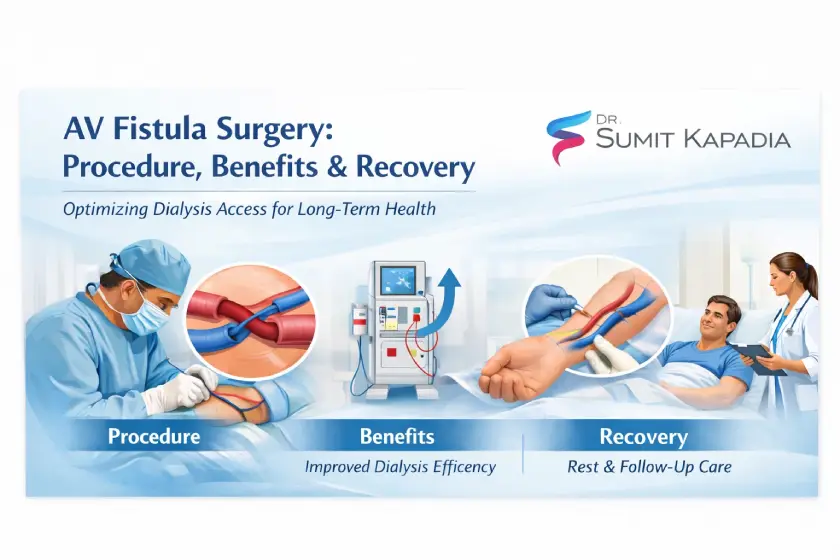
For patients who need long-term dialysis, treatment is not limited to machines, schedules, and medications. One of the most critical factors that determines how smooth and effective dialysis will be is vascular access, the pathway through which blood is removed, filtered, and returned to the body.
Without a reliable access point, dialysis sessions can become painful, inefficient, and prone to complications. This is why an AV fistula for dialysis is widely considered the safest and most dependable option. When planned at the right time, an AV fistula offers better blood flow, fewer infections, and long-term durability, making dialysis more comfortable and effective for patients.
This blog explains everything you need to know about AV fistula surgery, including how it is performed, its benefits, recovery expectations, costs, and possible complications.
What Is an AV Fistula for Dialysis?
An arteriovenous (AV) fistula is a surgically created connection between an artery and a vein, most commonly in the arm. Once connected, blood flows into the vein at higher pressure, causing it to gradually become stronger and wider.
After maturation, this vein can safely handle repeated needle insertions and provide the high blood flow required for efficient dialysis.
An AV fistula for dialysis is preferred because it:
- Has the lowest risk of infection
- Provides better blood flow for dialysis
- Lasts longer than catheters or grafts
- Requires fewer repeat procedures
For patients expected to remain on dialysis long term, an AV fistula is considered the best option.
What Is AV Fistula Surgery?
AV fistula surgery is a planned surgical procedure performed to create permanent dialysis access. It is usually advised weeks or months before dialysis begins, allowing enough time for the fistula to mature properly.
This surgery is recommended for patients who:
- Have advanced chronic kidney disease
- Are likely to need long-term dialysis
- Have suitable blood vessels in the arm
AV fistula surgery for dialysis is typically performed under local anesthesia and does not require an extended hospital stay.
AV Fistula Surgery Procedure (Step-by-Step)
Understanding the procedure often helps reduce anxiety and improve patient confidence.
Step 1: Pre-surgical assessment
Ultrasound mapping is done to evaluate arteries and veins and determine the best site for the fistula.
Step 2: Anesthesia
Local anesthesia is given to numb the area while the patient remains awake.
Step 3: Creating the fistula
A small incision is made, and the artery is carefully connected to a nearby vein.
Step 4: Closure
The incision is closed with sutures and covered with a sterile dressing.
The complete AV fistula surgery procedure usually takes 45 to 90 minutes.
Benefits of AV Fistula Surgery
The benefits of AV fistula surgery are long-term and clinically significant.
Some key advantages include:
- Improved dialysis efficiency
- Significantly lower infection rates
- Reduced risk of clot formation
- Long-lasting access that can function for years
- Fewer hospital visits and interventions
Because of these benefits, an AV fistula is considered the gold standard for dialysis access.
AV Fistula Surgery Cost (What Patients Should Know)
The fistula for dialysis cost in India depends on several factors, including hospital facilities, surgeon expertise, and pre-operative investigations.
On average, the AV fistula surgery cost ranges between ₹25,000 and ₹60,000.
While cost is an important consideration, opting for an experienced vascular surgeon can reduce complications and the need for repeat procedures in the future.
AV Fistula Surgery Recovery
Most patients experience a smooth AV fistula surgery recovery.
In the first few days, mild pain, swelling, or bruising at the surgical site is common and usually settles with basic care.
The fistula itself needs time to mature:
- Maturation period: 4–8 weeks
- Light activities: within a few days
- Normal routine: about one week
The overall AV fistula surgery recovery time varies depending on individual healing and vessel health. Simple hand exercises are often advised to help the fistula mature properly.
AV Fistula Surgery Complications
Although AV fistula surgery is generally safe, certain AV fistula surgery complications can occur.
These may include:
- Infection at the surgical site
- Bleeding or swelling
- Poor fistula maturation
- Clot formation
- Reduced blood flow to the hand (rare)
Regular follow-ups and early medical attention help prevent serious complications.
Do’s and Don’ts After AV Fistula Surgery
Do’s
- Check the fistula daily for vibration
- Keep the area clean and dry
- Perform fistula exercises as advised
- Attend scheduled follow-up visits
Don’ts
- Do not measure blood pressure on the fistula arm
- Avoid tight clothing or accessories
- Do not lift heavy weights
- Never allow injections or blood draws from that arm
These precautions are essential for long-term fistula health.
When to Consult Your Doctor
Seek medical attention if you notice:
- Absence of vibration or pulse
- Increasing pain, redness, or swelling
- Fever or discharge
- Numbness or coldness in fingers
- Sudden swelling of the arm
Early intervention can prevent fistula failure.
Conclusion
An AV fistula is not just a surgical connection; it is a lifeline for patients on dialysis. When planned early and created correctly, AV fistula surgery for dialysis provides the safest, most durable, and most reliable vascular access available.
With proper care, regular monitoring, and timely medical guidance, a well-functioning AV fistula can support effective dialysis for many years and significantly improve quality of life.
Frequently Asked Questions
It involves connecting an artery to a vein to create a strong and durable dialysis access.
No, it is considered a minor procedure and is usually performed under local anesthesia.
Initial recovery takes a few days, while full maturation takes around 4–8 weeks.
Lower infection risk, better dialysis efficiency, longer lifespan, and fewer complications.

Dr. Sumit Kapadia
MBBS, MS, MRCS, DNB-Fellow