Leg pain while walking is often dismissed as fatigue or muscle strain. However, in many cases, it can be an early sign of blocked leg arteries, a condition caused by reduced blood flow to the muscles of the legs.
As a vascular specialist, I frequently see patients who initially ignore symptoms such as cramping in the calves, heaviness in the legs, or discomfort that improves with rest. These symptoms may indicate vascular disease in legs, also known as peripheral artery disease.
When circulation becomes significantly restricted, medical treatment may be necessary to restore blood flow. Two commonly recommended options are angioplasty and leg bypass surgery, and each treatment works differently and is suited for different types of blockages.
In this article, I will explain how these procedures work and how doctors determine which treatment may be most appropriate for patients with blocked leg arteries.
Blocked Leg Arteries: Causes, Risks, and Complications
Blocked arteries in the legs usually develop gradually. The most common cause is atherosclerosis, a condition in which fatty deposits and cholesterol accumulate along the inner walls of arteries.
As plaque builds up, the arteries narrow and restrict blood flow to the muscles and tissues of the legs. Over time, this reduced circulation can lead to pain during walking and other symptoms of vascular disease in legs.
In my experience, several risk factors commonly contribute to this condition:
- Smoking
- Diabetes
- High blood pressure
- High cholesterol
- Obersity
- Lack of physical activity
- Aging
If blood flow continues to decrease, complications may develop. Poor circulation can cause slow-healing wounds, severe pain, or damage to tissues in the feet and legs. This is why early diagnosis and appropriate treatment for blocked leg arteries are extremely important.
Symptoms of Leg Artery Disease That Indicate Poor Circulation
One of the most common leg artery disease symptoms I see in patients is pain while walking. This pain typically appears in the calves and improves when the person stops walking.
Doctors refer to this symptom as claudication.
Other signs that may indicate poor circulation in the legs include:
- Cramping in the calves or thighs
- Numbness or weakness in the legs
- Coldness in the lower leg or foot
- Wounds that heal slowly
- Shiny skin or hair loss on the legs
- Discoloration of the skin
Not every patient experiences symptoms in the early stages. Some individuals may only discover they have blocked leg arteries during a medical examination or diagnostic test.
When Do Blocked Leg Arteries Need Medical Treatment?
In the early stages of the disease, treatment often focuses on lifestyle changes and medications. Patients are usually advised to quit smoking, improve their diet, increase physical activity, and control conditions such as diabetes or high cholesterol.
However, when blood flow becomes significantly restricted or symptoms begin to interfere with daily life, medical procedures may be necessary. At this stage, treatments such as angioplasty treatment or leg bypass surgery may be recommended to restore circulation.
Angioplasty Treatment for Blocked Leg Arteries
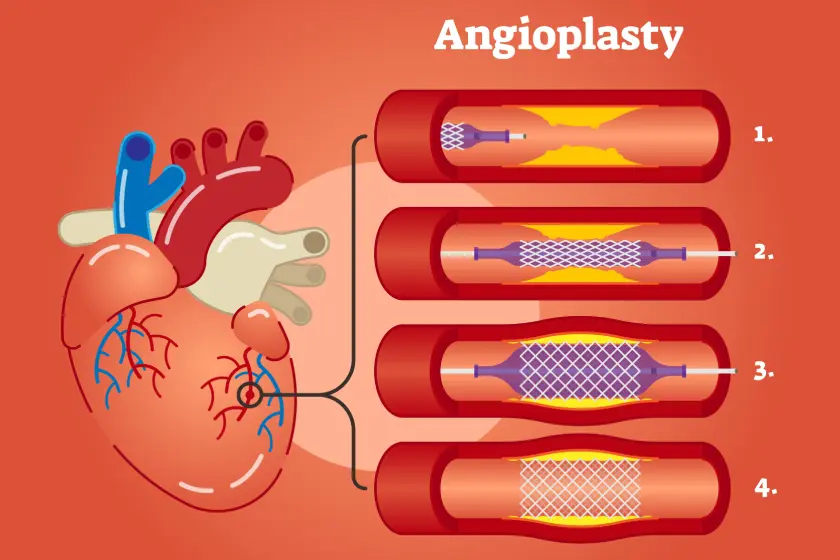
Angioplasty is a minimally invasive procedure used to open narrowed arteries and improve blood flow.
During angioplasty treatment, a thin catheter is inserted into the artery through a small puncture, usually in the groin. The catheter carries a tiny balloon that is positioned at the site of the blockage.
Once in place, the balloon is inflated. This presses the plaque against the artery wall and widens the artery, allowing blood to flow more freely.
In many cases, a small metal mesh tube called a stent is also placed in the artery to help keep it open after the procedure.
Because angioplasty does not involve large surgical incisions, it is often one of the first treatments considered for patients with blocked leg arteries.
Angioplasty Procedure for Leg Arteries: Benefits and Recovery
The angioplasty procedure for leg arteries is usually performed under local anesthesia and typically takes about one to two hours.
One of the advantages of angioplasty is that recovery is relatively quick. Compared with surgery, the procedure involves:
- A small puncture instead of a surgical incision
- Shorter hospital stay
- Faster return to daily activities
Most patients are able to go home the same day or the following day after the procedure.
Although angioplasty improves blood flow, patients still need to manage risk factors such as smoking, diabetes, and high cholesterol to prevent future blockages related to vascular disease in legs.
Leg Bypass Surgery: When Surgery Becomes Necessary
While angioplasty can successfully treat many cases of blocked leg arteries, some patients require a more complex procedure known as leg bypass surgery.
In this surgery, a new pathway is created for blood to flow around the blocked artery. This is done using either a vein from the patient’s own body or a synthetic graft.
The graft is connected above and below the blocked section of the artery. Blood then flows through this new pathway, bypassing the blockage and restoring circulation to the lower part of the leg.
Although leg bypass surgery is a more extensive procedure, it can provide significant improvement in blood flow for patients with severe artery blockages.
When Do Doctors Recommend Leg Bypass Surgery?
Based on clinical evaluation, doctors may recommend leg bypass surgery when:
- Artery blockages are long or severe
- Multiple arteries are affected
- Angioplasty treatment has not been successful
- Symptoms significantly limit walking or daily activities
- Risk of tissue damage due to poor circulation
The goal of the surgery is to restore blood flow and prevent complications related to vascular disease in legs.
Leg Bypass Surgery vs Angioplasty: Key Differences in Treatment
Both procedures aim to improve circulation, but they differ in how they are performed.
Angioplasty
- Minimally invasive procedure
- Small puncture rather than a surgical incision
- Shorter recovery time
- Often suitable for moderate artery blockages
Leg Bypass Surgery
- Open surgical procedure
- More extensive treatment
- Longer recovery period
- Often recommended for severe or complex blockages
In my experience, choosing between angioplasty and leg bypass surgery depends on the location and severity of the blockage as well as the patient’s overall health.
Recovery and Long-Term Results of Both Treatments
Recovery after angioplasty treatment is usually quick, and most patients return to normal activities within a few days.
Recovery after leg bypass surgery typically takes longer because it is a more complex surgical procedure. Patients may require several weeks to regain full strength and mobility.
Both treatments can significantly improve circulation and reduce leg artery disease symptoms. However, long-term success also depends on lifestyle changes.
I often advise patients to:
- Stop smoking
- Maintain healthy cholesterol levels
- Control blood sugar
- Stay physically active
- Maintain a healthy weight
These steps help prevent future artery blockages and support overall vascular health.
Conclusion
Blocked arteries in the legs can affect mobility and overall quality of life if left untreated. In many cases, symptoms such as pain while walking or slow-healing wounds may indicate reduced circulation due to vascular disease in legs.
Both angioplasty treatment and leg bypass surgery can effectively restore blood flow in patients with blocked leg arteries. Angioplasty is often recommended for moderate blockages because it is minimally invasive and involves quicker recovery. Leg bypass surgery may be necessary when blockages are more severe or complex.
In clinical practice, the most appropriate treatment is determined after careful evaluation of the patient’s condition, symptoms, and overall vascular health.
Frequently Asked Questions
Leg bypass surgery is a procedure in which a new pathway for blood flow is created around a blocked artery in the leg using a vein or synthetic graft.
Some discomfort is expected after surgery, but pain is usually controlled with medication and improves as the patient recovers.
Yes. Walking is encouraged during recovery because it improves circulation and helps restore strength in the legs.
Blocked arteries reduce blood flow to the legs, which can lead to pain, poor wound healing, and, in severe cases, tissue damage.
Common leg artery disease symptoms include pain while walking, numbness in the legs, cold feet, and wounds that heal slowly.
The best treatment depends on the severity of the blockage. Mild cases may be managed with medication and lifestyle changes, while severe cases may require angioplasty or leg bypass surgery.

Dr. Sumit Kapadia
MBBS, MS, MRCS, DNB-Fellow